October 19, 2026 · Indumor
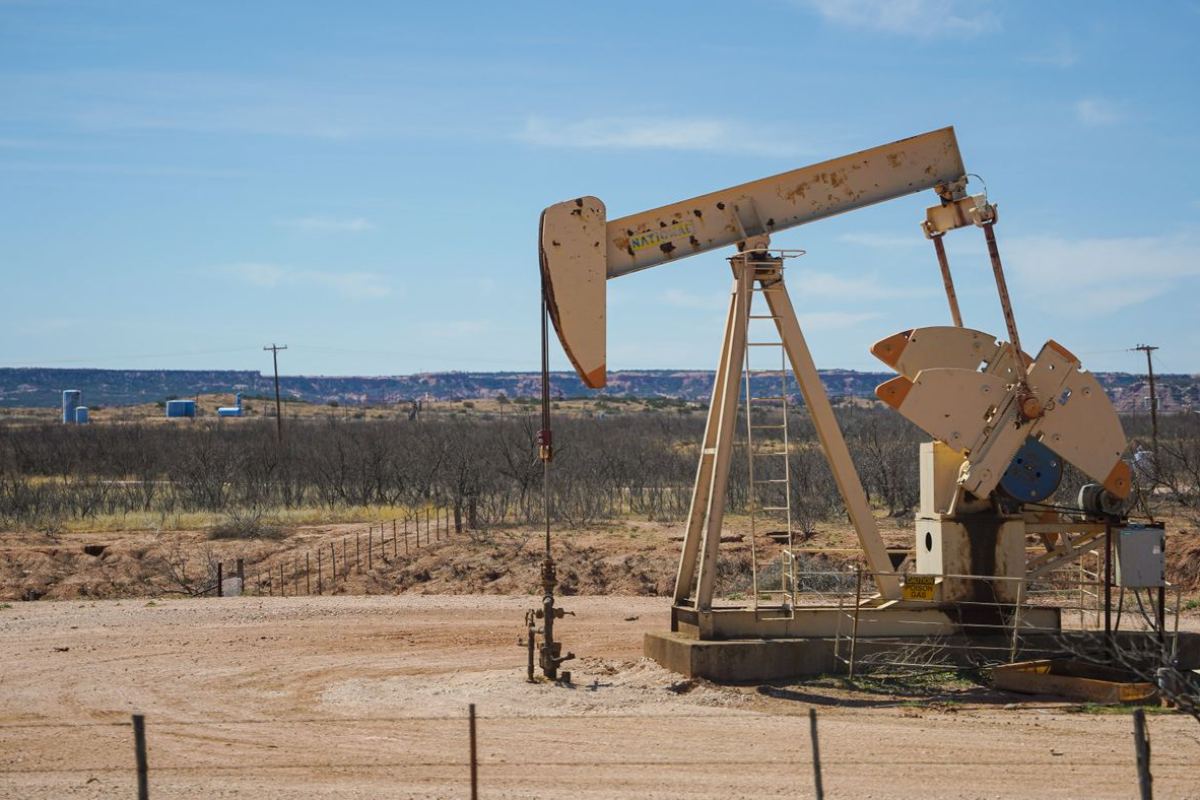
People assume conventional oil is a thing of the past, that it is all Vaca Muerta now and that pumpjacks are a postcard from another era. It is the other way around: thousands of wells with pumping units keep producing every day in the Golfo San Jorge, Mendoza, Neuquén and the north of Argentina, and maintaining them is a steady market. In 2025 and 2026, many of those fields also changed owners. These are the questions we hear most about that world.
The beam pumping unit is the nodding donkey of the oil field. It turns a motor’s rotation into a reciprocating motion that, through a rod string, drives a pump at the bottom of the well. It is used once the well no longer has enough pressure to flow on its own. Units are built to specifications such as API 11E, and they are basically a large steel structure under fatigue every day of their lives.
In almost every mature basin. The Golfo San Jorge, with fields like Cerro Dragón, is pumpjack territory; so are conventional Neuquén and Río Negro, Mendoza and the north. These are fields with decades of production, sustained by secondary recovery and thousands of units that need constant maintenance.
Around a pumpjack there is plenty of shop work: bases and skids that support and align it, counterweights, guards and barriers protecting moving parts, maintenance platforms and stairs, and wellhead structures. And there is repair of the unit itself: structures cracked by fatigue, supports and joints reconditioned or replaced.
Fatigue, above all: millions of load cycles over the years. Misalignment, an unlevel base, a badly adjusted counterweight or corrosion speed things up. An unbalanced pumpjack punishes its structure, the gearbox and the rod string, and ends in a shutdown costlier than a timely correction.
A well-maintained pumpjack can work for decades, but it needs regular checks: counterweight balance, alignment with the wellhead, the condition of the base and its anchors, welds on the most loaded parts, bearings and the gearbox. Many operators schedule regular rounds and measurements, and when a unit shows cracks or wear, a timely repair costs a fraction of a failed unit and a well that stops producing.
The pumpjack is only one part. There is the wellhead, flowlines, manifolds, the battery with separators and tanks, and in mature fields, water injection plants. We cover it all in oilfield surface facilities.
It should be. Don’t do this: replace a damaged pumpjack guard or barrier with an improvised fence of pipe and wire. A pumpjack’s moving parts trap and strike with enormous force, and a poorly made guard gives a false sense of safety. A well-designed barrier blocks access to the motion zone, withstands a vehicle impact and comes off for maintenance.
That is where the opportunity is. As YPF exited many mature areas, operators such as San Benito Upstream and PECOM, among others, took over fields that need reconditioning on tight budgets. Each basin’s map is in Argentina’s oil basins, and the sector’s general list in steel fabrication for oil and gas. Those operators are drawing up their plans now: if you have pumpjacks to recondition or guards to replace, send us the survey and Indumor will quote before the next campaign starts.
Bases, guards, platforms and repairs on campaign timelines.
© Indumor 2010–2026 — Industrial steel fabrication, Córdoba, Argentina
