October 16, 2026 · Indumor
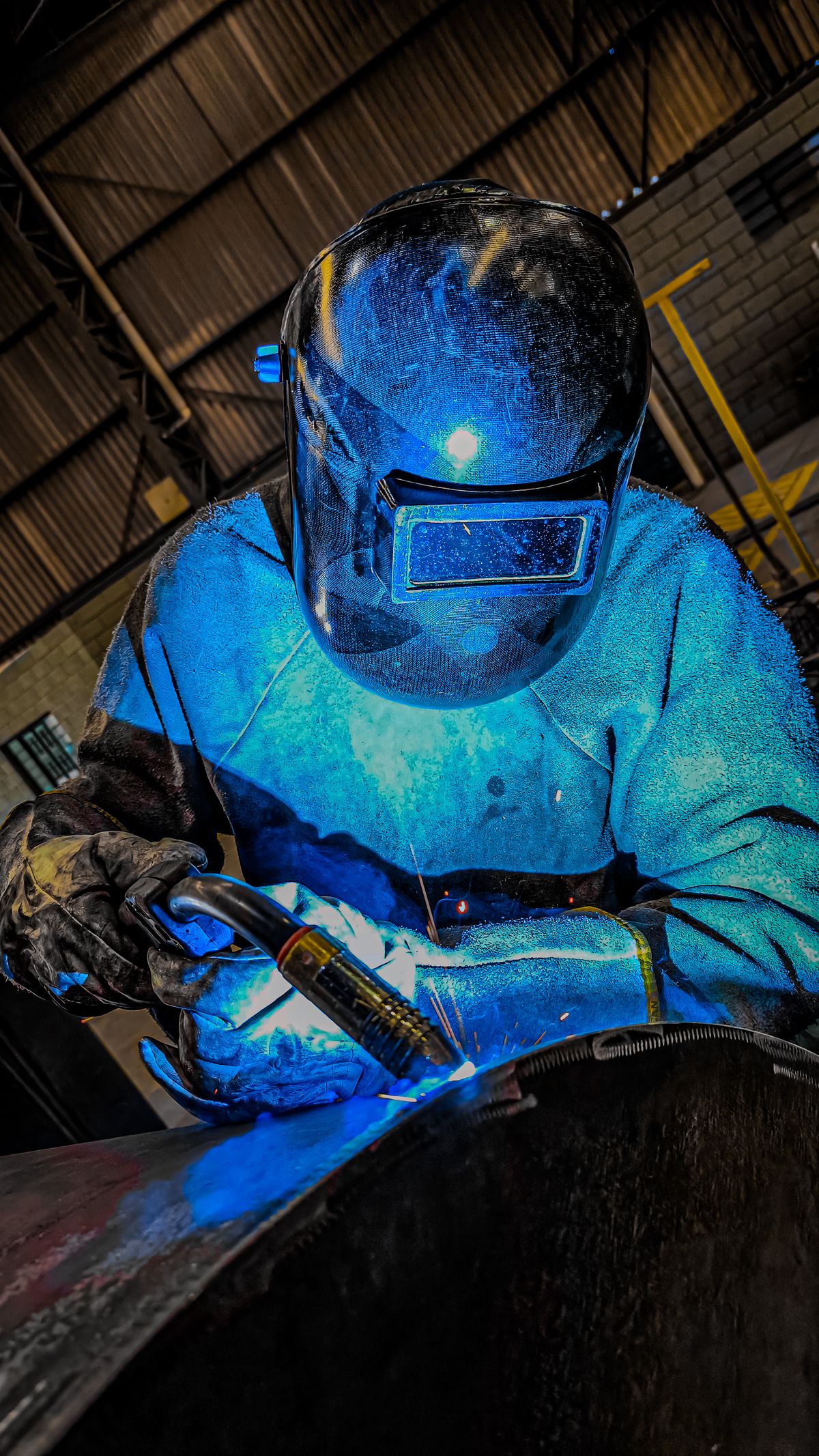
A MIG welder deposits up to 4 times more metal per hour than a stick welder. That single number explains why industry migrated massively to MIG — and also why stick and TIG are still alive: some things speed does not solve.
The short answer, in case you are in a hurry: MIG for carbon steel production. TIG for stainless, aluminum and cosmetic seams. Stick for field work, wind and thick plate. The rest of this article is the why.
Continuous wire, shielding gas, pull the trigger and weld. Fast. Clean. Easy to keep consistent across long runs — exactly what build-to-print fabrication demands. Its limit: shielding gas hates wind, so outdoors it loses.
Tungsten electrode, filler fed by hand, total puddle control. Slow — nobody denies it. But when the seam shows, when the material is sanitary stainless or aluminum, when the part is thin and heat must be dosed like medicine, nothing else comes close. In our plant, everything that touches food gets TIG. Period.
The simplest machine, no gas, works in wind, light rain and any position. Penetrates deep in thick sections. That is why field erection and site repairs remain stick territory: where shop tidiness cannot reach, the 7018 can.
So who chooses? At Indumor, the part defines the process: material, thickness, finish and where the welding happens. They often coexist: MIG for the bulk of the assembly, TIG for the visible detail. To see how this plays out in a full structure, continue with welded vs bolted buildings — and if you have a real job in hand, quote it directly.
Send the drawing: we pick the process and quote.
© Indumor 2010–2026 — Industrial steel fabrication, Córdoba, Argentina
