October 17, 2026 · Indumor
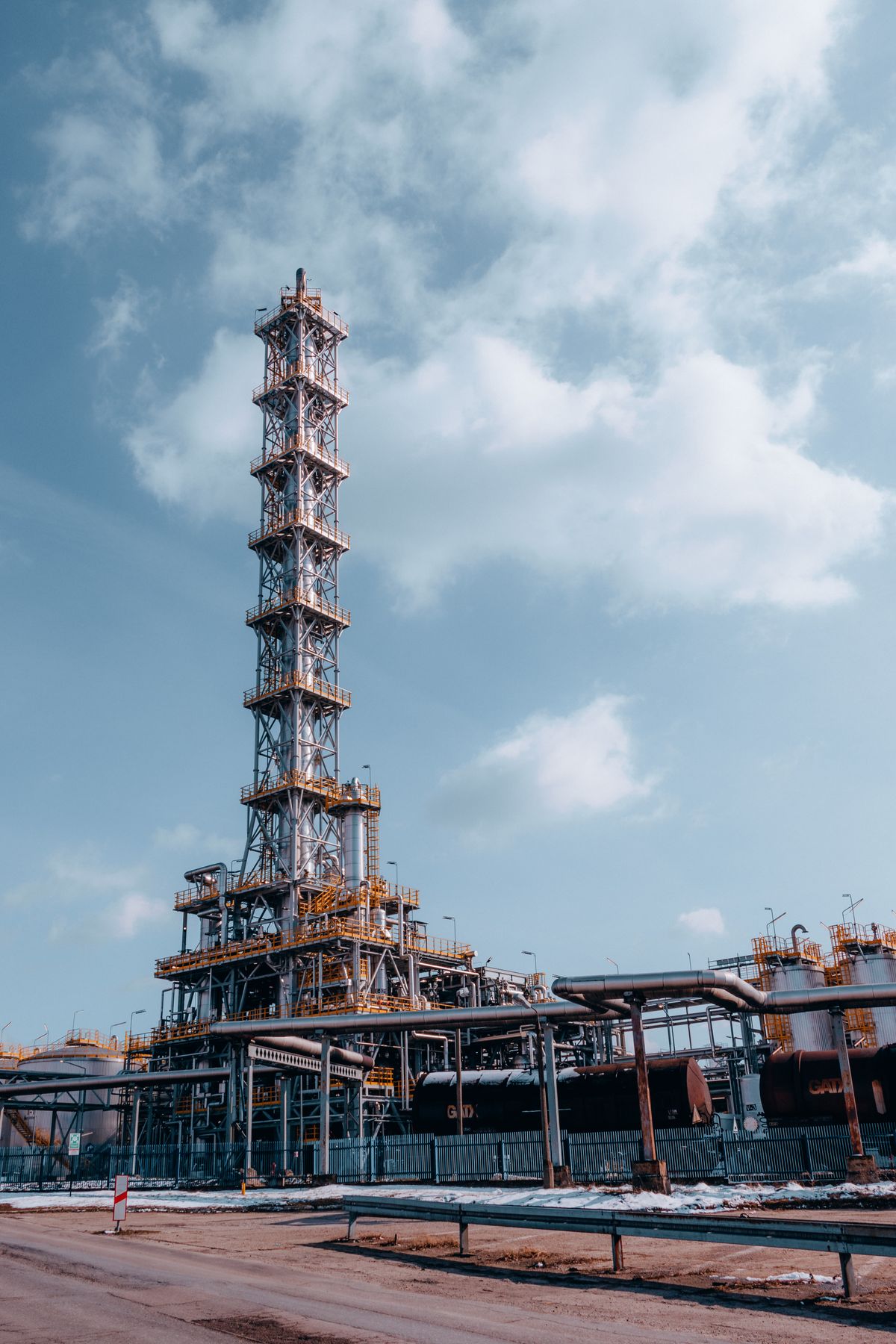
“In Vaca Muerta we don’t drill wells anymore — we manufacture them.” Operators repeat the line, and it captures the shift: wells are drilled in series, several from the same location, with rigs moving from one pad to the next like stations on an assembly line. And a factory, unlike a lone well, consumes inputs every single day — which means its supply chain has to run like a factory too.
The 2026 numbers back it up. In August, Neuquén province produced 685,316 barrels of oil per day, a record and up 25% year on year, with unconventional output making up 97.5% of it. The province now supplies 74% of Argentina’s oil and 75% of its gas. In July, 41 rigs were working the shale and a record 15 frac fleets were active. June closed with 2,760 frac stages, another record… and that same month more than a thousand stages were lost to logistics bottlenecks.
That last figure matters most to suppliers: Vaca Muerta’s limit is no longer the rock, it is the supply chain. To understand what a shop like Indumor sells to the basin today, it helps to compare two worlds.
| Conventional | Vaca Muerta | |
|---|---|---|
| Unit of work | The single well | The multi-well pad |
| What it buys | Spares, repairs, maintenance | The same, plus new plants, pipelines and tanks |
| Pace | Steady | Records month after month |
| How it buys | Part by part | In series, with repeating designs |
| Bottleneck | Budget | Logistics and suppliers |
Conventional oil still buys, and buys a lot, but it buys to maintain: spares, repairs, the pumpjack that needs reconditioning. Vaca Muerta buys to grow. Every new pad, every treatment plant, every export line is a steel list that repeats, sometimes identically, dozens of times. It is probably the only industry in the country where sand — yes, sand — is a critical input that travels over a thousand kilometers before it is used. In June 2026 alone, more than 600,000 tonnes were pumped in the basin, at a pace of 92 frac stages a day, and moving that volume takes silos, hoppers, conveyors and bases that are steel too — and someone has to build them.
The base list, in more detail, is in our guide to steel fabrication for oil and gas. What changes in Vaca Muerta is scale and speed — which is why prefabricating everything possible in the shop wins, from piping spools to complete modules.
In Vaca Muerta, lead time is part of the specification: a skid that arrives a week late leaves a finished well unable to produce, and that costs the operator more than the whole skid.
The operational heart is Añelo, about a hundred kilometers from the city of Neuquén, where the Vaca Muerta Industrial Park opened in March 2026: 35 hectares on Provincial Route 17, with 106 lots for bases, workshops and warehouses. To the north, Rincón de los Sauces hosts the Bajo del Choique–La Invernada development and the Puesto Hernández hub, where the Vaca Muerta North oil pipeline ends. On the Río Negro side, Allen is the head of both VMOS and the Oldelval system. Each of those points receives steel every week, and a good share of what gets installed arrives by truck from other provinces — from our plant in Córdoba, Añelo is a little over a thousand kilometers by road, roughly a day and a half by truck.
Selling into Vaca Muerta is not just about fabricating well. Operators run supplier portals, qualifications and audits, and they ask for documentation many shops are not used to producing: qualified welding procedures, mill certificates traceable to the heat, dimensional and test reports, and an auditable health and safety system. Neuquén also has its own local-content law, which gives preference to companies established and certified in the province — close to 900 were certified by July 2026.
For an out-of-province or foreign supplier, that does not close the door; it defines the role. Heavy, serial fabrication — the kind that needs covered floor space, lifting equipment and hundreds of workers — gets bought where the capacity is, while erection and on-site maintenance stay with local contractors. Well coordinated, both win. And for international operators used to documentation in English, we produce it that way.
Production is growing faster than the pipe to move it, and the answer is a wave of infrastructure. The VMOS oil pipeline links Allen to Punta Colorada on the Río Negro coast: 437 kilometers, a terminal with six 120,000 m³ tanks and single-point moorings to load tankers. First crude fill is planned for late 2026 and the first export cargo for early 2027, with capacity starting at 180,000 barrels per day and targeting 550,000 by the end of 2027. In parallel, Duplicar Norte adds 207 kilometers and 220,000 barrels per day, and the Perito Moreno gas pipeline expansion adds 14 million cubic meters per day by April 2027. Every pump station, compressor plant and terminal is a steel project in its own right.
Gas has its own chapter: Southern Energy’s first floating liquefaction vessel is due in the San Matías Gulf in the second half of 2027, fed by a dedicated pipeline of about 470 kilometers, while Argentina LNG — YPF, Eni and XRG — has announced its final investment decision for late November 2026.
On top of that infrastructure sit the projects approved under the RIGI incentive regime: Pampa Energía’s Rincón de Aranda, with a 45,000-barrel-per-day crude treatment plant starting in 2027; Pluspetrol and GyP’s Bajo del Choique–La Invernada near Rincón de los Sauces, at US$12.4 billion, with four production plants and some 200 first-tier SME suppliers; and Tecpetrol and GyP’s Los Toldos II Este, with 380 wells planned. Every plant is a full catalog: pipe racks, tanks, platforms, supports, skids.
Conventional oil rewards the shop that repairs fast. Vaca Muerta rewards the one that thinks like a factory: repeatable design, series production, full traceability and on-time dispatch. Demand already overflows the province, and there is room for capable shops from across Argentina working alongside Neuquén’s own supplier network — including for international EPCs looking for in-country fabrication. And it rewards one more thing: consistency. A supplier who makes ten deliveries in a row on time is worth more than one who dazzles on the first and fails on the second. Mill certificates, weld maps and NDT reports are no longer extras here; they are the price of entry.
Next time you read a record-breaking Vaca Muerta headline, look behind the number: hundreds of skids, kilometers of pipe rack and tanks that someone built on time. If you want the next ones built by us, send the bid package — we quote in English.
Skids, pipe racks, tanks and structures built in series, fully traceable.
© Indumor 2010–2026 — Industrial steel fabrication, Córdoba, Argentina
