October 19, 2026 · Indumor
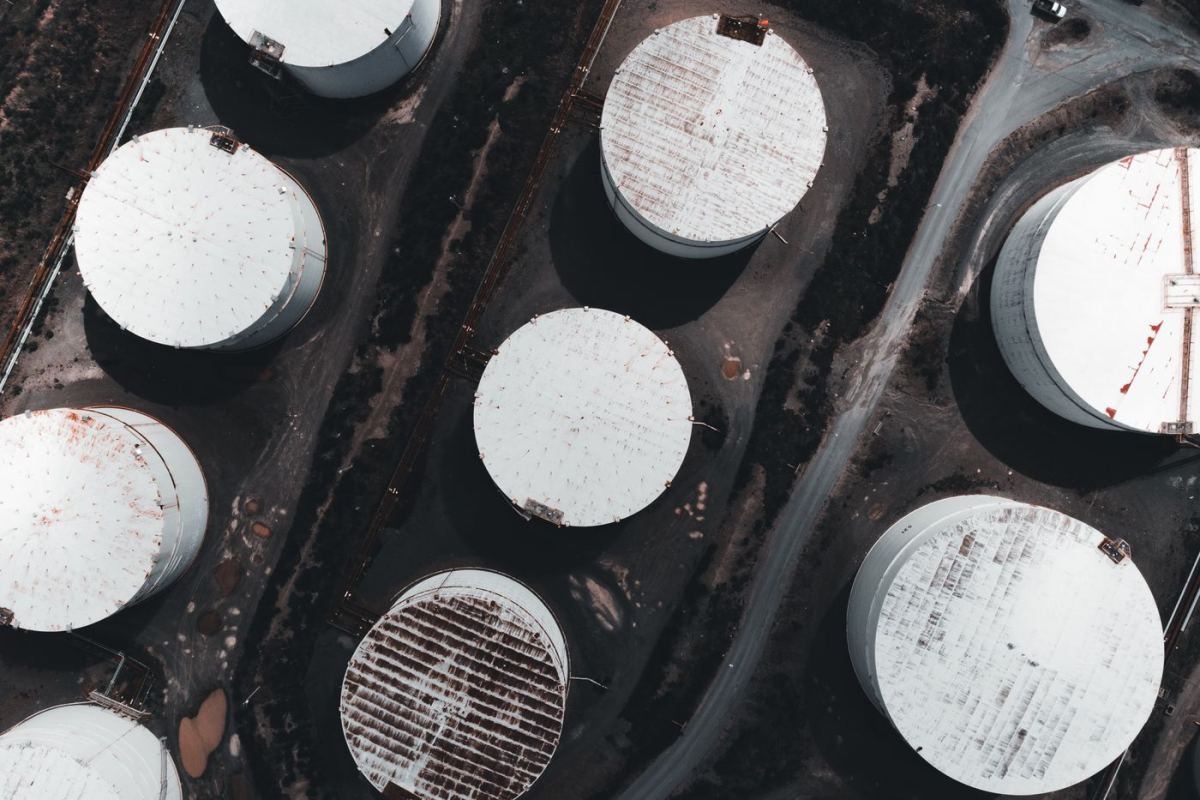
If you store a liquid that barely evaporates — diesel, water, oils — a fixed roof is more than enough. If you store something volatile in large volumes — gasoline, light crude, condensate — a floating roof stops being an option and becomes the rule. That is the answer. The rest is understanding why, and which variant to choose.
A fixed roof is the classic: a cone or dome resting on the shell, with a vapor space between liquid and roof. Every time the tank fills, that vapor goes out through the vents; every time it empties, air comes in. With volatile products, that means evaporation losses, emissions and a potentially flammable atmosphere inside. A floating roof eliminates that space: it floats on the liquid and rises and falls with it.
Fixed cone or dome roof, for low-volatility products. External floating roof, with no fixed roof above, typical of large crude tanks; API 650 covers it in Annex C. And internal floating roof: a fixed roof above and a floating deck below, sheltering it from weather and rain; covered by Annex H. Simple. But not trivial.
An option few people know: an existing fixed-roof tank can be converted. Installing an internal floating deck is one of the most common ways to cut losses and emissions in tanks that changed service or fell short of new requirements. It means reviewing the shell, the vents and the access. But it avoids building a new tank.
The advice, selling nothing: choose the roof for the real product and its worst-case temperature, not for today’s product. Tanks last decades, and what gets stored in them sometimes changes.
The standard governing these tanks is covered in API 650; chemical-industry tanks in petrochemical tanks; and product differences in diesel vs gasoline. More about our tanks at Indumor.
We help you choose by product, size and climate.
© Indumor 2010–2026 — Industrial steel fabrication, Córdoba, Argentina
