October 19, 2026 · Indumor
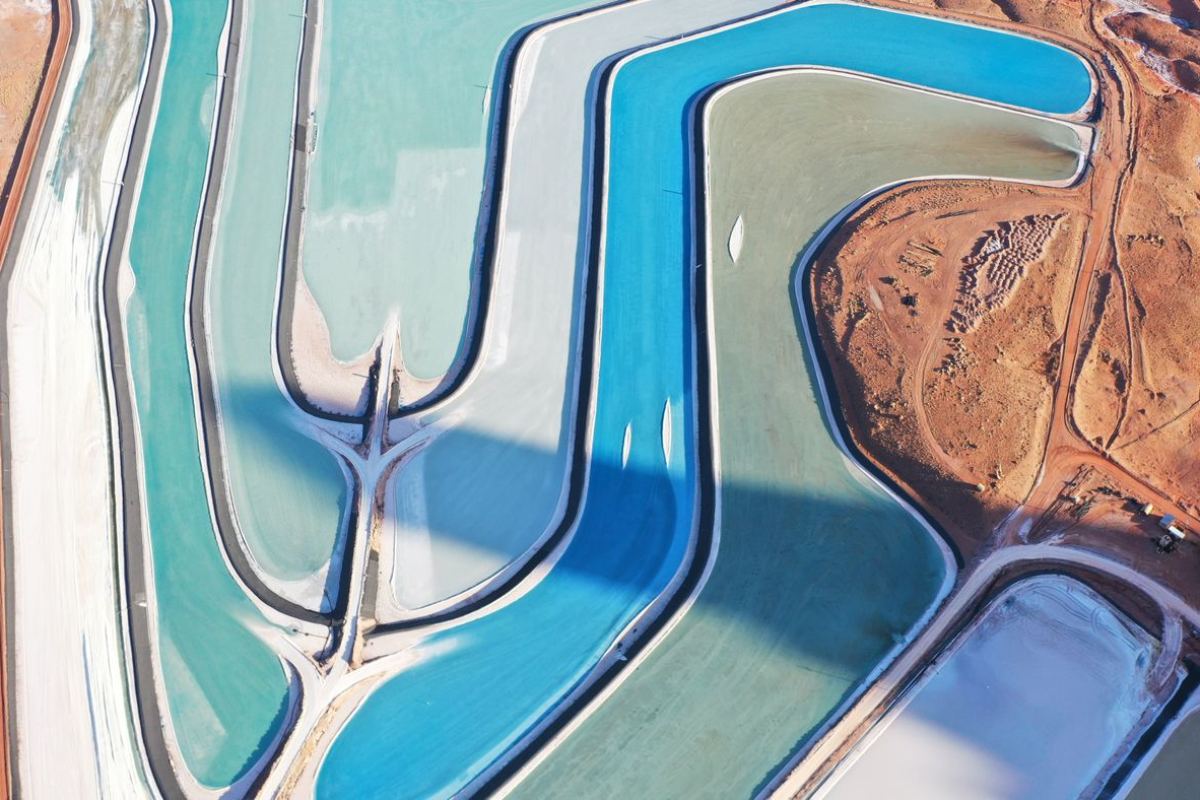
Lithium carbonate: a white salt, Li₂CO₃, obtained by precipitating lithium out of a brine with sodium carbonate. That is the textbook definition. For a fabrication shop, a carbonate plant is something else: a system of tanks, reactors, pumps, piping and structures moving saline liquids and reagents at nearly 4,000 meters, all year, nonstop.
Argentina has produced lithium since the late 1990s, when the Salar del Hombre Muerto operation started up. For decades it was a niche. Today, with 120,000 tonnes produced in 2025 and installed capacity heading toward 275,000 by the end of 2026, plants are multiplying — and with them comes a question every supplier must be able to answer: what fails in a lithium plant, and how fabrication prevents it.
Brine is water loaded with salts, chlorides above all, and chlorides are the natural enemy of carbon steel and of several stainless grades. Add reagents such as lime, soda ash, hydrochloric acid and caustic soda; salts that precipitate and form scale inside piping and equipment; saline dust settling on structures; and a daily temperature swing that on the Puna can go from below freezing to full sun in a few hours. It is a hostile environment however you look at it.
When materials are chosen wrong, the result shows up fast: carbon steel tanks leaking from corrosion, piping plugged by scale, flanges that cannot be opened for cleaning, structures rusting under saline dust and stairs that become unsafe. In a plant running year-round, every failure is lost production, and every spare part takes days to reach the Puna. Under-specified steel is cheap exactly once.
One clarification matters: a pond plant is not the same as a direct-extraction plant. Ponds concentrate brine in the sun for months, with little plant and lots of piping; direct lithium extraction does the same in hours with columns, tanks and process equipment — far more steel per tonne. The expansions announced in 2026 increasingly take that second road.
Two systems often left off the list are steel too: water and power. A lithium plant needs process water, sometimes treated or desalinated, with its tanks, filters and pumps; some, like Fénix, use mechanical evaporators to concentrate brine or recover water. And it needs energy: gas arriving by pipeline, power lines, backup generators and, increasingly, the plant’s own solar park. Each of those systems adds frames, supports, rooms and structures — all of which must survive the same saline, high-altitude conditions as the process itself.
The actual projects are covered in mining in Catamarca and in Salta, and the stainless choice in 304 vs 316 stainless. A concrete offer: send us your process flow diagram or equipment list and Indumor will return, free of charge, a materials proposal and an open quantity takeoff for the tanks and structures. The rest is chemistry.
We propose materials and quote tanks, silos and structures with an open takeoff.
© Indumor 2010–2026 — Industrial steel fabrication, Córdoba, Argentina
