October 17, 2026 · Indumor
120,000 tonnes. That is how much lithium Argentina produced in 2025, measured as lithium carbonate equivalent — 62% more than the year before, according to the national Mining Secretariat, making the country the world’s fifth-largest producer. A central part of that story is being written on a single salt flat in Catamarca province, about 4,000 meters up: the Salar del Hombre Muerto, in Antofagasta de la Sierra department.
Catamarca is living two kinds of mining at once. Lithium, already producing and expanding; and copper, returning after years of pause with a project that reuses the infrastructure of Argentina’s most iconic mine. For a steel fabricator they are two different customers with two different shopping lists. At Indumor we follow both closely, because both sit one or two truck-days from our plant in Córdoba.
You rarely see this much activity in one place:
Four companies, different technologies and one shared logistics problem: everything installed there arrives over mountain roads, at an altitude where every task takes twice the effort.
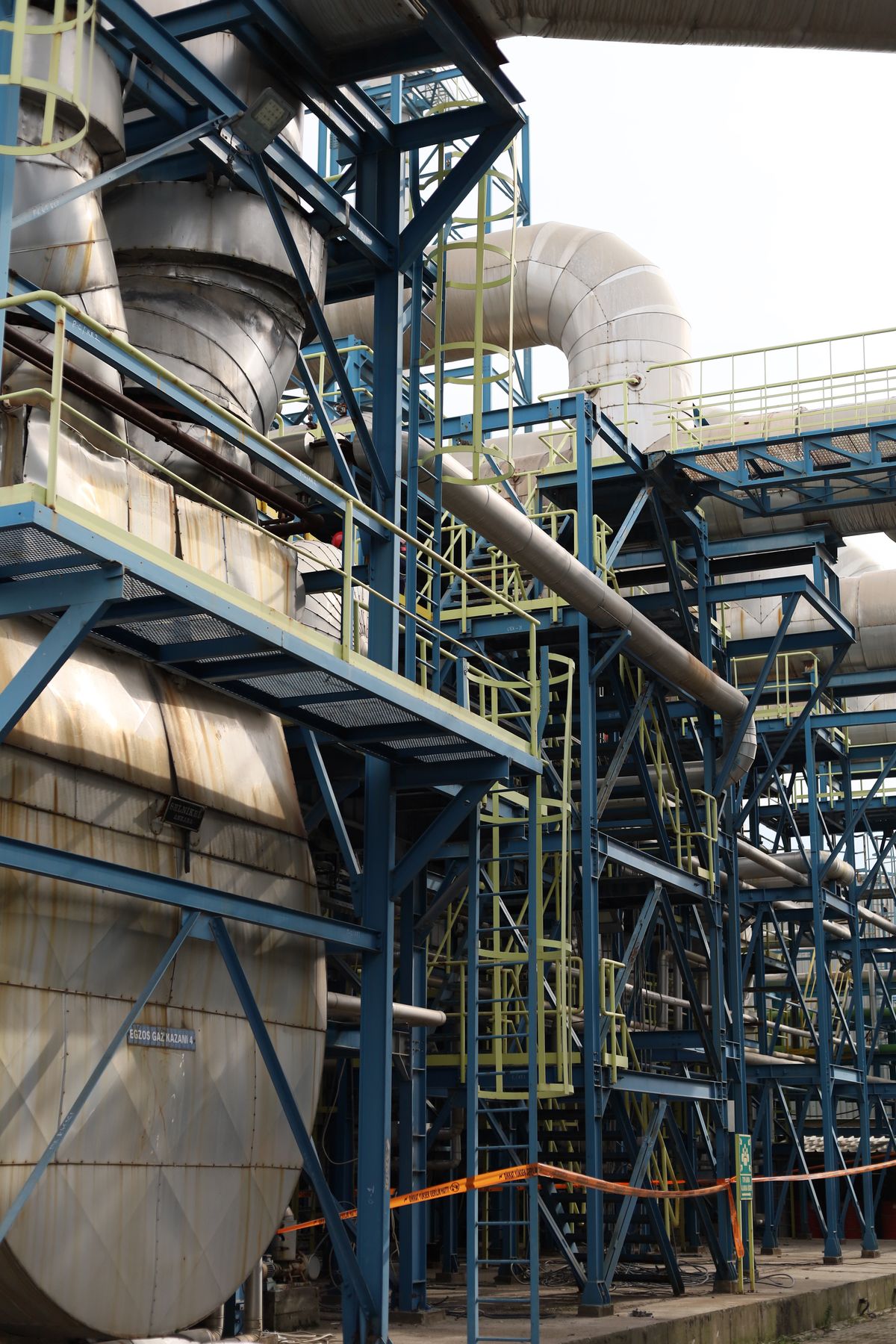
That each project runs a different technology is not a technical footnote for suppliers: it changes what gets bought. Evaporation ponds concentrate brine in the sun for months; they need pumping stations between ponds, long piping runs, walkways and light structures, but relatively little plant. Adsorption and direct lithium extraction do in hours what ponds do in months, and in exchange they bring columns, process tanks, pumps and piping inside industrial buildings, with far more steel per tonne produced. Nanofiltration adds membranes and pressure equipment mounted on skids. And they all end the same way: a carbonate plant with reactors, filters, drying and storage for reagents such as lime and soda ash.
For a fabricator that means two kinds of order: structures and piping in large quantities for the ponds, and process equipment, skids and tanks for the plants. The expansions announced in 2026 lean more and more toward direct extraction — toward the second family.
In the west of the province, in Tinogasta department, the Tres Quebradas (3Q) project of Zijin and Liex pumps brine from a salar at 4,300 meters and processes it at a plant in Fiambalá. Stage one produces 20,000 tonnes a year of carbonate, and in July 2026 a US$594 million expansion entered the RIGI to add 40,000 tonnes more using direct extraction, operating from 2029. For Fiambalá that meant a new power line and hundreds of jobs. For suppliers, it means a process plant that grows in stages — and every stage is a new list of tanks, structures and piping.
More is coming: Lake Resources’ Kachi went through public consultation in 2026 with a direct-extraction design based on ion exchange that reinjects almost all of the brine.
For twenty years, Bajo la Alumbrera, in Belén department, was the school of large-scale Argentine mining. When it closed its cycle it left behind the plant, the tailings dam, a concentrate pipeline of over 300 kilometers to a filter plant in Tucumán — from where concentrate traveled by rail to a port in Santa Fe — and a generation of trained suppliers. Glencore’s MARA project builds on that legacy, integrating the Agua Rica deposit, in Andalgalá, with Alumbrera’s infrastructure. That reuse is the project’s great advantage: years of construction saved on infrastructure that already exists.
On October 2, 2026 Glencore announced RIGI approval for MARA, with an estimated investment of about US$4 billion and average output above 200,000 tonnes of copper in concentrate a year over its first ten years. Before that, the company plans to restart Alumbrera, with first production in the second half of 2027: the project already employs about 2,000 people, with construction expected to peak near 3,500.
Nearby, YMAD’s Farallón Negro — an underground gold and silver mine, also in Belén — is a reminder that mining in Catamarca never fully left.
Lithium and copper buy differently. A lithium plant is chemistry: brine and reagent tanks, reactors, filters, steel buildings for soda ash and lime, kilometers of piping and pump skids. Where chlorides and reagents are present, stainless steel and linings stop being a luxury. A copper mine is mechanics: crushing, grinding and flotation, with hoppers, chutes and wear liners, conveyor steelwork, platforms and stairs in industrial quantities.
We see it in our yard: a frame for a high-altitude plant gets fully assembled, fitted with its pumps and checked before it ships. What does not fit in Ferreyra will not fit at 4,000 meters, in the wind at minus ten. That is why we would rather add two days of trial assembly in Córdoba than a week of field fixes on the Puna. Lifting lugs, tie-down points and numbered match-marks make all the difference once the truck arrives.
And there is a common list nobody escapes: code-compliant stairs and railings, enclosures, gates, guards, camp modules and tanks for water and diesel to fuel fleets in places where the nearest pump is hours away.
Antofagasta de la Sierra and the Hombre Muerto are reached from Belén on Provincial Route 43, a high-altitude road with gravel stretches; Fiambalá sits on National Route 60, which continues to the San Francisco Pass and Chile. That geography shapes every part: breakdown designed for the truck, lifting points planned in, bolted joints where on flat ground you would weld, and protection for a long, dusty, cold trip. Fabrication that arrives finished, tested and ready to erect is what consumes the fewest hours in a place where every hour is expensive.
The Fénix expansion, Sal de Oro’s second phase, the 3Q expansion and the Alumbrera restart all carry dates between 2027 and 2029. Fabrication packages for those projects are awarded months earlier, and suppliers who enter the chain during construction usually stay through operations. For international EPCs, an in-country fabrication partner also counts toward the local-supplier commitment every RIGI project must file. If you are bidding into a Catamarca project, now is the time to secure fabrication capacity: send us the technical package and we will return a proposal — in English — with lead times that hold.
Shop-finished, shop-tested fabrication, ready to erect on the Puna.
© Indumor 2010–2026 — Industrial steel fabrication, Córdoba, Argentina
