October 19, 2026 · Indumor
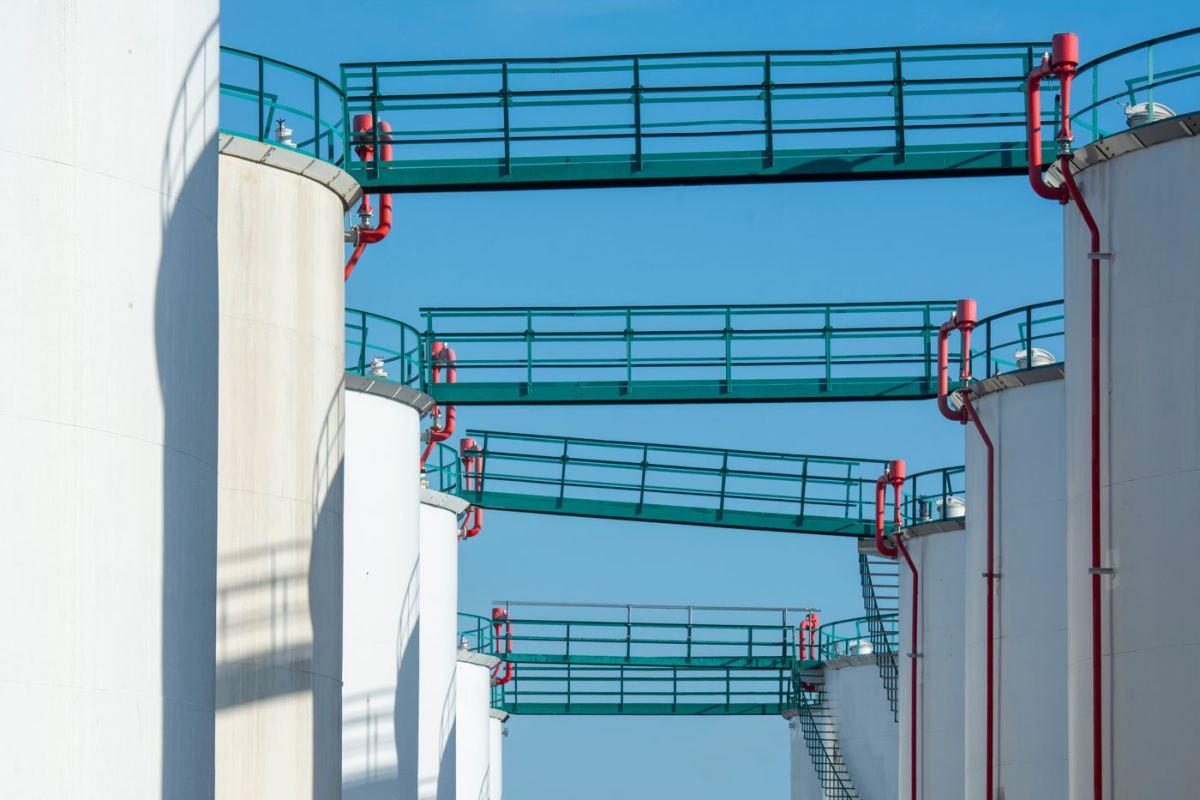
It happens often: someone arrives convinced they want to bury their diesel tank “so it is out of the way”, and leaves having bought an aboveground one. We do not talk anyone into anything; it is just that once everything is on the table, the buried tank loses in almost every case that is not a cramped fuel station. Let’s walk through the decision in the order it should be made.
Regulations treat the two very differently. In Argentina a tank counts as underground with as little as 10% of its volume below grade, and Resolution 404/94 then applies regardless of size — own-use fueling included; aboveground tanks only enter the national registry from 50 m³ per tank or 100 m³ per site. In the US, underground storage tanks fall under the EPA’s UST program, with leak detection and corrosion protection rules. Then look at space: an aboveground tank needs safety distances and a containment dike or double wall; a buried tank saves surface area but costs excavation, concrete and backfill.
And run the full numbers, not just the tank’s. Aboveground adds a foundation, a dike or double wall and maybe a canopy or impact protection. Underground adds excavation, an anchoring slab, select backfill, corrosion protection, grade-level vents and fill boxes, a leak detection system and periodic testing for its entire life. At equal capacity, the buried tank almost always ends up costing more, even when the tank itself costs about the same.
An aboveground tank sits on a foundation or on engineered saddles, with its vents, grounding and, if single wall, its dike; plan from day one for the delivery truck’s access, the dispenser location and a barrier against vehicle impact. A buried tank has an enemy few anticipate: it floats. An empty 22,500-liter (about 5,900-gallon) tank in water-saturated soil receives roughly 22.5 tonnes of upward thrust, which is why it gets anchored to a slab or ballasted. It also needs flame-arrested vents and, if steel, protection from soil corrosion. Don’t do this: bury a bare single-wall steel tank with no coating and no cathodic protection. Argentina’s Resolution 404/94 requires cathodic protection for bare steel, and wet soil eats it anyway, with or without a resolution. Steel underground tanks are typically built to UL 58, or coated composite systems such as ACT-100.
An aboveground tank is inspected by eye: a stain, a drip or a rust spot shows up the same day. A buried tank is controlled through daily inventory and periodic tightness tests — in Argentina, every five years for tanks up to five years old, every three between five and ten, and every two after that. A leak must be reported within 24 hours, and cleaning up contaminated soil can cost more than the tank.
Then there is the end of the story, which almost nobody looks at when buying. An aboveground tank at the end of its life gets emptied, cleaned and lifted out with a crane in a morning; it can even be relocated. A buried one must be degassed, dug up, removed and, often, the surrounding soil studied and remediated. What was saved in space at the start gets paid back, with interest, at the end.
The verdict? For industry, farming, mining and job sites, a double-wall aboveground tank wins almost every time. For an urban fuel station, buried still makes sense — although since Decree 46/2025 Argentina also allows aboveground tanks at stations. For the paperwork, see Argentina’s tank regulations; for the product, diesel vs gasoline. At Indumor we build fuel storage tanks and industrial tanks in both families.
Next time you see an aboveground tank at a brand-new fuel station, you will know why it is there: easier to monitor, cheaper to maintain and, in Argentina, allowed since 2025.
Tell us the site and the consumption: we recommend the option and quote it.
© Indumor 2010–2026 — Industrial steel fabrication, Córdoba, Argentina
