October 19, 2026 · Indumor
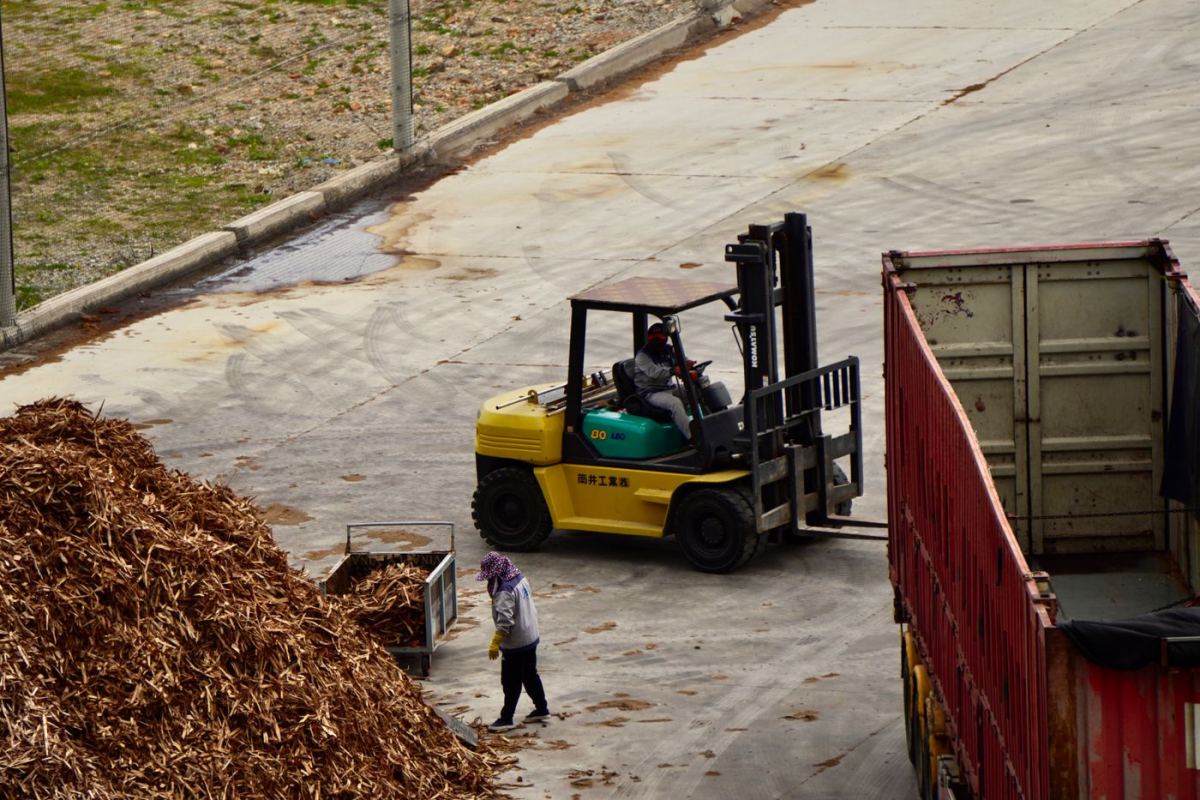
To make one tonne of pellets from sawdust fresh off the saw, you have to evaporate about 800 kilograms of water.
That is not a typo. Fresh sawdust can be half water by weight, and a pellet mill wants it at 10 to 15% moisture. Everything in between is the dryer’s job. The same goes for the chips that feed a boiler, and for the husks and pomace of agro-industry: biomass is only worth something as fuel or raw material once the water is out.
Thirty years ago, sawdust was a nuisance at many sawmills: it piled up, got burned in the open or was given to whoever would haul it away. Today it is the raw material for pellets and briquettes, and fuel for industrial boilers. The change comes with one condition, and that condition is moisture. A pellet mill will not compress wet sawdust: the pellet comes out soft and falls apart. And a boiler burning wet chips spends a good share of its heat boiling off the fuel’s own water instead of heating process water.
Agro-industrial residues tell a similar story. Grape and olive pomace, bagasse, husks: all of them can be fuel or feedstock, and all of them arrive wetter than they should. Drying turns a waste you had to pay to remove into a product you can sell or burn to good effect.
Two families of dryers handle biomass. The rotary dryer is the most common when volumes are large: a high-capacity drum working with hot gas in co-current flow, so the wettest material meets the hottest gas and the dry material leaving does not overheat. The belt dryer, a continuous tunnel, runs cooler and can use waste heat from another process, such as boiler flue gas; it takes more floor space, but the material barely moves and the fire risk is lower. Which one fits depends on throughput, available heat and space, and we cover it in rotary or tunnel dryer.
Dry biomass burns. Sounds obvious. It is less obvious when you are handling a flammable material inside a machine full of hot gas, hour after hour, with fine dust looking for any corner to settle in. That is why a biomass dryer is designed with outlet temperature as a limit, not an outcome; with a chamber that knocks out sparks before the drum; with spark detection and extinguishing in the ducts; and with dampers that shut the flow if anything goes out of range.
Dry, not bone-dry. The material should not leave drier than the next step needs: every extra point of moisture removed is fuel spent and risk added, with nothing gained in the pellet or the boiler.
The big advantage of drying biomass is that the fuel can come from the same place. A furnace burns bark, screen rejects or part of the material itself, and its hot gas feeds the dryer. A sawmill drying its sawdust with its own bark buys no gas, depends on no pipeline and puts to work a residue that used to be a problem. If the end product is animal feed or food-grade, the heat goes through a heat exchanger; for fuel pellets, the gas can enter the drum directly. The options — firewood, chips, pellets, gas or diesel — and what changes with each are in fuels and insulation for industrial dryers.
And as with any dryer, insulating the drum, furnace and ducts keeps the heat you generate working inside. With biomass it also helps hold outlet temperature steady, which is the variable that matters most for safety.
In short: drying is what turns biomass into a product, and doing it well comes down to temperature, safety and a good fuel that is often already sitting in your yard. If you have sawdust, chips or husks to dry, at Indumor we propose the dryer and furnace that fit your plant.
We propose the dryer and furnace that use your own residue as fuel.
© Indumor 2010–2026 — Industrial steel fabrication, Córdoba, Argentina
