October 19, 2026 · Indumor
The cheapest fuel is the fuel you never burn.
It sounds like wordplay, but it is the best summary of how to think about energy in an industrial dryer. A dryer is, above all, a machine for evaporating water, and evaporating water is expensive: every kilogram needs more than 2,200 kilojoules just to go from liquid to vapor, and in practice a dryer spends a good deal more than that, because it also heats the product, heats the air or gas leaving through the stack and loses heat through its walls. Part of all that heat is unavoidable. Part of it is not.
For decades, energy for Argentine industry was so cheap that few people worried about the avoidable part. With subsidized gas, an uninsulated drum or an oversized burner were details that never showed up on a balance sheet. At today’s prices that habit is expensive: a dryer that leaks heat through its walls is literally money up the chimney. The good news is that two decisions are made once and pay off for the life of the machine: which fuel to use and how much to insulate. This is the list we go through with every customer before designing a dryer, rotary or tunnel.
The fuel and insulation checklist
- What is at your plant gate? Pipeline natural gas is the most convenient: it modulates finely, automates easily and needs no storage. Without a pipeline, tank LPG or diesel do the same job, usually at a higher cost per calorie. Biomass, firewood and pellets depend on the region: near forestry or agro-industry they can be the cheapest; far from them, freight eats the advantage.
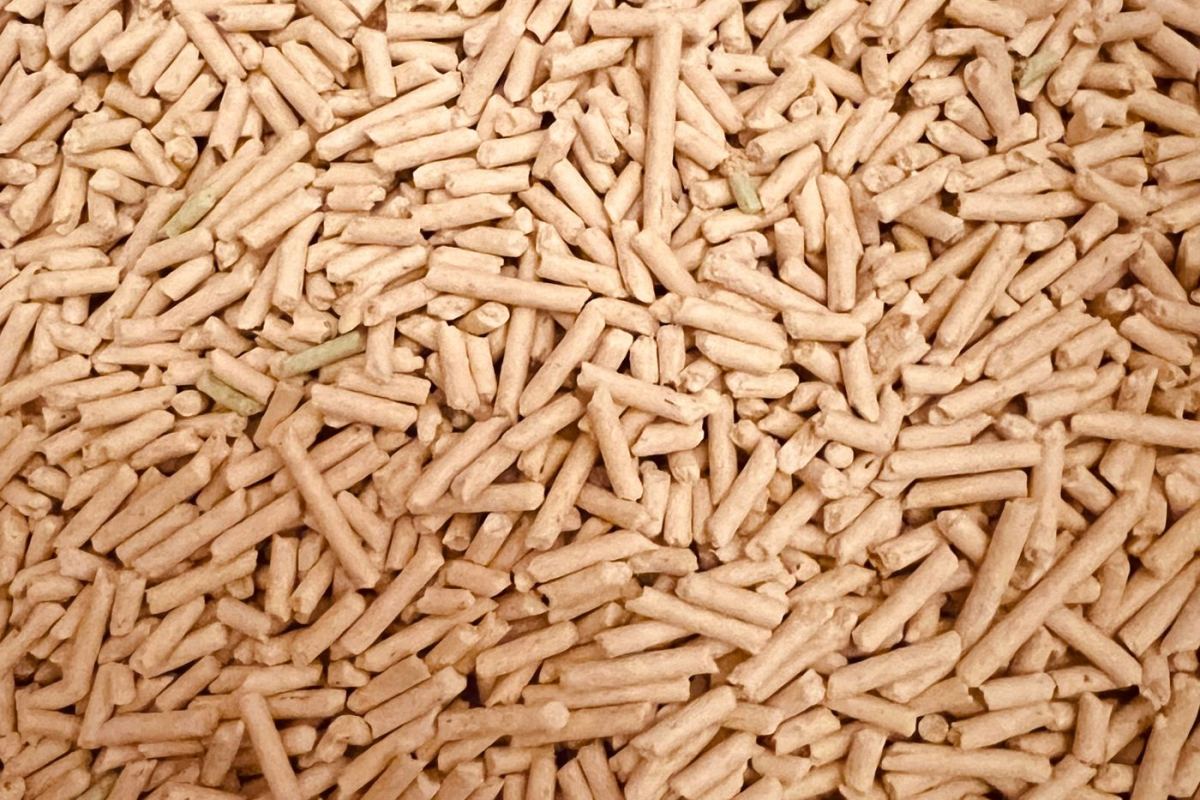
- Compare per calorie, not per unit. Each fuel delivers different energy. As a reference: natural gas, around 9,300 kcal per cubic meter; LPG, about 11,000 kcal per kilogram; diesel, about 8,600 kcal per liter; wood pellets, 4,000 to 4,300 kcal per kilogram; seasoned firewood, about 3,400 kcal per kilogram, and green firewood, under 2,000. The right comparison is the cost of each million kilocalories delivered to the burner, not the price per cubic meter, liter or tonne. Exact values depend on the supplier and, for solid fuels, on moisture.
- Solid fuel moisture rules. Green firewood spends part of its own heat drying itself before it gives off useful heat. That is why the same furnace performs very differently on wood seasoned for a year than on freshly cut wood, and why pellets, dry and uniform, are the most predictable solid fuel of all.
- Can the smoke touch the product? With minerals, yes: combustion gas runs straight through the drum and all its heat is used. With food, feed or any sensitive product, no: the heat must pass through a heat exchanger and the gas leaves through the stack without touching the product. The exchanger adds cost and some loss, but for those products it is not optional.
- Ash and sparks. Solid fuels leave ash and can carry sparks. The furnace needs a chamber that knocks them out before the dryer, and the plant needs a routine to remove ash every day. With gas, LPG or diesel the problem simply does not exist.
- How much labor you want to put in. Gas and diesel start at the push of a button and regulate themselves. Pellets and chips are fed by screw conveyors and automate quite well. Firewood, on the other hand, needs someone to stoke the furnace, and the heat rises and falls with every load; with a delicate product, that swing has to be offset by control.
- Where and how it is stored. Diesel needs a tank with secondary containment; LPG, a pressure vessel with its permit; pellets, a silo or covered hopper; firewood and chips, a yard that keeps them out of the rain. Storage space is part of the cost too, and it pays to plan it together with the dryer.
- Emissions and permits. A biomass-fired dryer needs particulate collection before the stack, and each jurisdiction sets its own limits. In its favor, carbon dioxide from biomass is biogenic: the plant took it from the atmosphere while growing, which is why emission inventories report it separately from fossil fuel emissions.
- Insulate the drum, chamber and ducts. A bare steel shell at 150 °C loses heat by radiation and convection over its whole surface. A good thickness of mineral wool, with metal cladding to protect it from rain and knocks, cuts that loss to a small fraction. Areas that cannot be insulated, such as riding rings and the drive, are kept small by design.
- Recirculate what still has value. In tunnel dryers, air leaving one zone can still pick up moisture: part is recirculated and part is exhausted. Some rotary dryers recirculate part of the exhaust gas. Every kilocalorie reused is one you do not buy.
- Measure to control. Exhaust gas temperature at the dryer outlet is the best indicator of how the dryer is running: if it climbs, you are overspending; if it drops too far, the product may leave wet or vapor may condense in the baghouse. A burner controlled on that temperature burns exactly what it needs.
What insulation saves: a worked example
Take a drum 2 meters in diameter and 12 meters long, with its shell averaging 150 °C in 20 °C ambient air. Its surface area is about 75 m². Bare, between radiation and convection, it loses on the order of 2,200 watts per square meter: some 165 kW going into the air for as long as the dryer runs. With 100 mm of mineral wool and metal cladding, the loss drops to about 60 watts per square meter, and the outer cladding stays cool enough to touch: around 5 kW in total.
The difference, about 160 kW, equals almost 15 cubic meters of natural gas per hour. In a dryer running 7,200 hours a year — three shifts, 300 days — that is more than 100,000 cubic meters of gas a year, and some 200 tonnes of carbon dioxide not emitted. Multiply by what you pay per cubic meter and you have the figure in your own currency. Other temperatures and sizes change the result; the order of magnitude stays.
Insulation has two more effects that never show up on the bill. The first is safety: a drum at 150 °C burns whoever touches it, and an insulated one does not. The second is control: with lower losses, outlet temperature holds steadier, the burner runs more evenly and the product comes out more uniform, with no overcooked spots and no wet ones.
Here, economy and ecology pull in the same direction. A well-insulated dryer, with the right fuel and proper dust collection, spends less and emits less. And if the fuel is a residue from the plant itself — bark, husks, rejects — the dryer also solves a problem you used to pay to have hauled away.
Further reading
Next time you walk past a dryer and feel the heat on your face, remember you already paid for that heat. All it takes is keeping it inside, where it works.
← Back to the Knowledge Hub
