October 19, 2026 · Indumor
Heap leaching: a copper extraction method in which ore is stacked on an impermeable liner and irrigated with an acid solution that dissolves the copper; the pregnant solution is collected, goes through a solvent extraction plant and ends in an electrowinning tank house, where copper plates out as high-purity cathode. That is the technical definition. The short version: instead of grinding rock to powder, you “wash” it with chemistry, and the result is metallic copper ready to sell, without going through a smelter.
That is the route chosen by Los Azules, McEwen Copper’s project in Calingasta, San Juan, Argentina — and one reason it draws so much attention.
The deposit sits at about 3,500 meters. The plan is to produce copper cathode with no conventional tailings dam and roughly a quarter of the water a concentrator would use. It projects 205,000 tonnes a year over its first five years and an average of 148,000 tonnes over a 22-year life. Its October 2025 feasibility study put capex at US$3.17 billion; its RIGI application was approved in September 2025 for US$2.672 billion; and in August 2026 the company chose to bring power via a line from a future substation in Mendoza. The final investment decision was expected by the end of 2026.
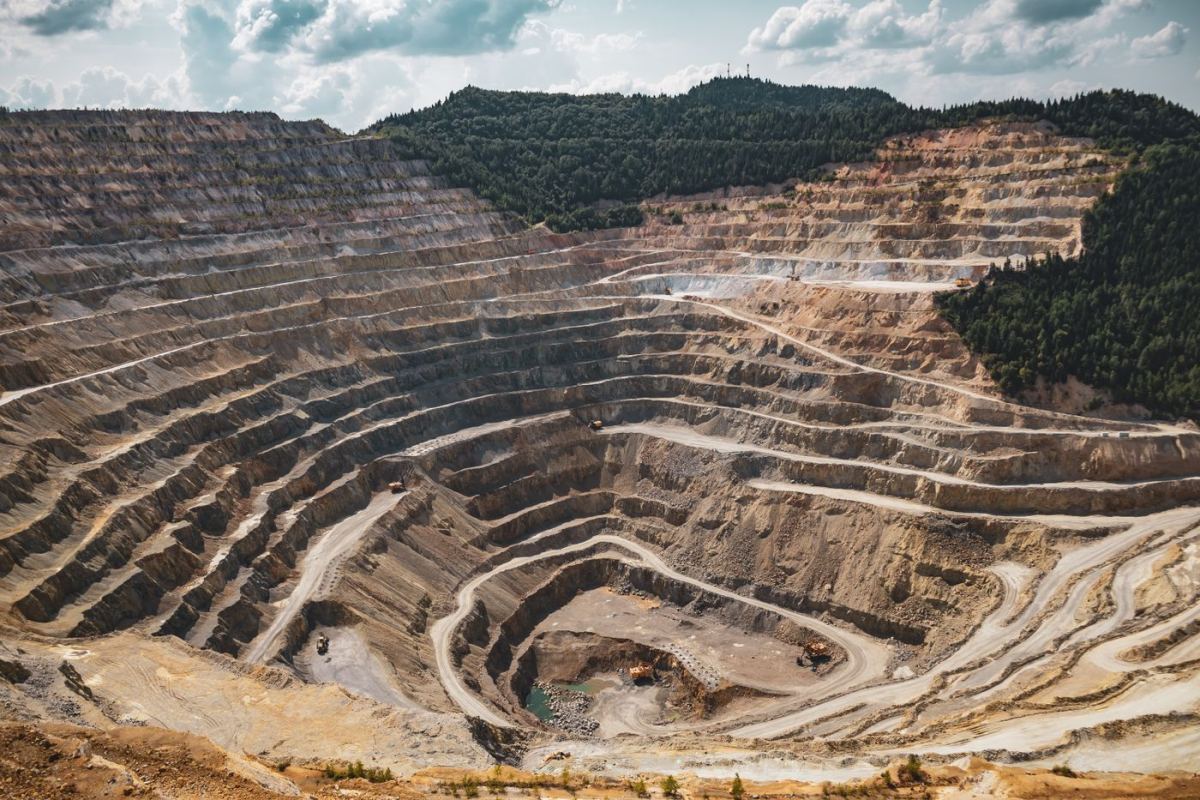
Ore is mined from the pit, crushed and conveyed to the heaps, where an irrigation system distributes the solution. What drains out, loaded with copper, collects in ponds and is pumped to the solvent extraction plant: a series of large vessels where copper moves from the solution into an organic reagent and from there into a concentrated electrolyte. That electrolyte reaches the electrowinning tank house, a huge building with hundreds of cells where electric current plates copper onto cathodes. An overhead crane pulls the cathodes, which are washed, stacked and shipped.
Less grinding than a concentrator, but plenty else. Structures for the crushing plant and the conveyors feeding the heaps. Solution, organic and electrolyte tanks, many in acid-resistant materials. Piping and pipe racks linking heaps, ponds and plant. An electrowinning building with crane runway structure, where erection accuracy matters as much as in any industrial building. And sulfuric acid tanks: something that surprises many is that concentrated acid is stored in carbon steel, because at that concentration it barely attacks it; diluted, it corrodes steel fast, and that is where linings or stainless come in.
Los Azules shows that new copper mining is not a single recipe. A cathode mine buys differently from a concentrator, and a supplier who understands both stands a better chance in a province with projects of each type: Vicuña and El Pachón will produce concentrate; Los Azules, cathode. And because the project relies on a power line coming from Mendoza, it opens work on the other side of San Juan’s mountains too. One more detail: with no conventional tailings dam, much of the risk and the construction shifts to the heaps, the ponds and the solution plant, which is where fabrication concentrates. For North American suppliers familiar with leach-SX-EW operations in Arizona or Chile, the process will look familiar; the logistics will not.
To see how it compares with a conventional mine, continue with what gets built at a copper mine. And if your company is already bidding packages for Calingasta, write to us.
The provincial map is in San Juan mining; crane buildings in crane runway structures; and materials for aggressive environments in 304 vs 316 stainless. At Indumor we build structures, tanks and piping for mining, quoting in English.
Structures, acid-resistant tanks and piping for cathode mines.
© Indumor 2010–2026 — Industrial steel fabrication, Córdoba, Argentina
