October 19, 2026 · Indumor
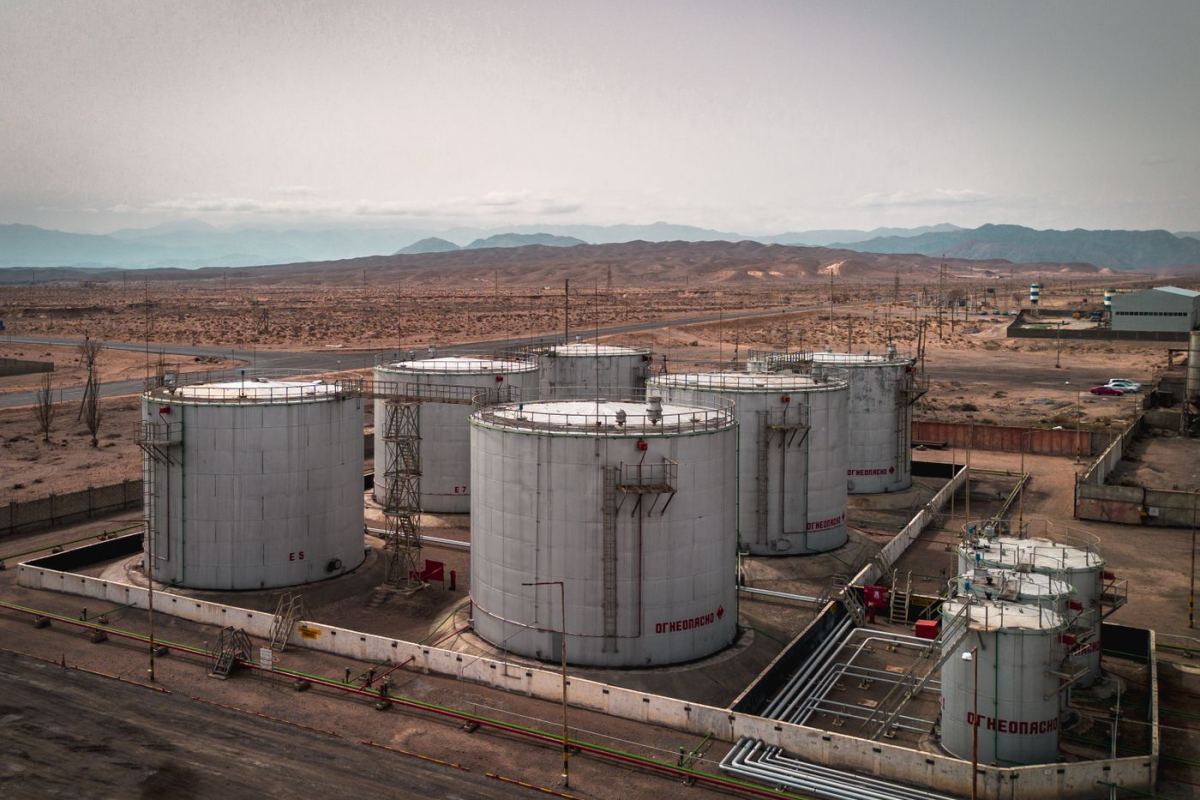
“They are just some tanks.” The line comes up in almost every early meeting on a mining project, when someone runs through the scope of the auxiliary facilities. And it is understandable: next to a concentrator, a conveyor several kilometers long or a camp for hundreds of people, tanks look like a detail. Until you count them. On a recent list for the auxiliary facilities of a copper mine at feasibility stage, we counted 33 tanks of 18 different types, from 200-liter drums to a 130 m³ tank.
On a mine schedule, tanks tend to be defined last. First come the plant, crushing and ore handling; only then the facilities that keep everything running: the truck shop, the lube bay, the wash bay, the camp. And the tank list often arrives with no specifications: a name, a volume and, with luck, a dimension. It is not as simple as it sounds. Behind every line there is a fluid, a pressure, a reference standard, a support and a mountain road the truck carrying it has to get through.
Tanks defined late get built late, and the shop, lube bay or camp start up on temporary fixes that are hard to remove later. Tanks defined wrong lead to expensive mistakes: a carbon steel potable water tank without a lining approved for drinking water, a hydropneumatic tank never designed as a pressure vessel, or a four-meter-diameter tank that will not clear a bend on the access road.
These are the lines that show up at nearly every mine, with sizes from that list as a reference:
Watch the diesel: a fuel tank at a mine never comes alone. It needs a containment dike or a double wall, and that choice changes its footprint, its cost and how it is inspected. We cover it in detail in containment dikes or double wall.
On top of that, three design conditions are not negotiable in the Andes. Seismic: much of Argentina’s mining country is highly seismic, and anchors and saddles are designed to the INPRES-CIRSOC 103 code. Wind, to CIRSOC 102, along with snow and site altitude. And transport: tanks of 3 to 4.5 meters in diameter travel as permitted wide loads, so the width of the mine road sometimes sets the tank diameter. For fuels, the full line is under fuel storage tanks; for everything else, steel tanks. And if the project includes housing for the crews, mining camps covers what gets built for that other first job on site.
If your project has a tank list to define, send it as it is: we return every line defined, with materials, reference standards, lead times and a budget to move forward. Reach us through Indumor.
We complete it line by line, with materials, reference standards, lead times and budget.
© Indumor 2010–2026 — Industrial steel fabrication, Córdoba, Argentina
