October 19, 2026 · Indumor
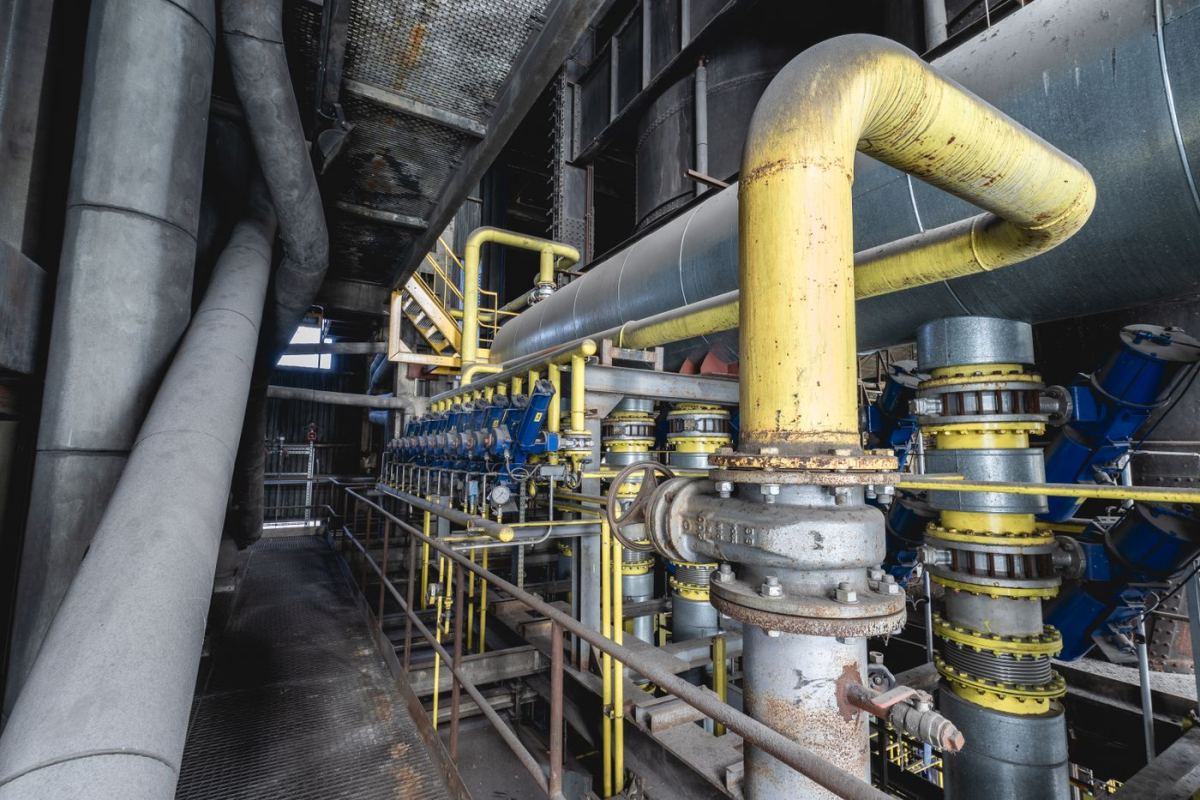
Why does the oil and gas industry buy so much equipment “on a skid”? Because at a location hundreds of kilometers away, what arrives assembled, tested and ready to connect is worth twice what arrives in pieces. These are the questions we hear most before an order.
Many. Metering skids, quantifying oil or gas production. Chemical injection skids, dosing corrosion and paraffin inhibitors or biocides, with their tanks and pumps. Pumping and transfer skids. Gas regulating skids, reducing pressure for a consumer. Filtration, separation and heating skids. Each one is a small plant on a frame. Small, but a plant.
The usual split is clear. The fabrication shop builds the frame, supports, prefabricated piping and mechanical assembly of the equipment. Instruments, electrical and automation come from the integrator; pressure vessels from specialized manufacturers under their code. A good skid comes out of that coordination, and a shop that understands the integrator’s job makes everything easier.
Enough stiffness to keep pumps and motors aligned after the trip and the lift; four engineered lifting points; a drip pan containing any leak; grounding; supports to level and anchor at the location; and room for the operator to reach every valve and for maintenance to pull every unit. The frame is the first thing designed. And the last thing remembered when it fails.
Piping gets hydrotested, the frame gets a dimensional check and, with the integrator, the relevant functional tests are run. Everything is documented. A skid tested in the shop can be corrected in hours; one that fails at the location costs days and trips.
The project’s, which usually combine several: process piping is typically designed and fabricated to ASME B31.3; pressure vessels to their own code, in shops certified for it; the structure and its welds to criteria such as AWS D1.1; and the electrical side to the hazardous-area classification, handled by the integrator. The shop must know which part is its own and document it properly.
Skids where a pump cannot come out without dismantling half the piping. Drip pans with no drain, filling with rainwater until they are useless. Lifting lugs nobody calculated. Piping that loads its weight onto pump nozzles and knocks them out of alignment. And valves placed where the operator cannot reach without climbing. All of them are visible on the drawing — if someone looks at it with an operator’s eyes.
Complete when possible, within dimensions that move without special permits; otherwise in modules joined on site through planned connections. With delicate parts protected, lifting points marked and documentation in the same shipment.
It depends on the equipment. The good news: the frame, supports and piping get built in parallel while imported pumps or instruments arrive, and assembly happens once everything is in the shop. That is why you should order the skid as soon as the process is defined, not when the last piece of equipment lands.
If your Vaca Muerta project has a start-up date — and they all do — the skid gets ordered now. Every week of waiting is a week less of margin.
The general case for frame-mounting is in equipment skids; where each skid sits on a location in from the well to the battery; prefabricated piping in piping: shop vs field; and the basin’s scale in Vaca Muerta. At Indumor we build frames, supports and piping for skids, coordinating with your integrator — in English.
Order the skid now: we build frame and piping while the equipment arrives.
© Indumor 2010–2026 — Industrial steel fabrication, Córdoba, Argentina
