October 19, 2026 · Indumor
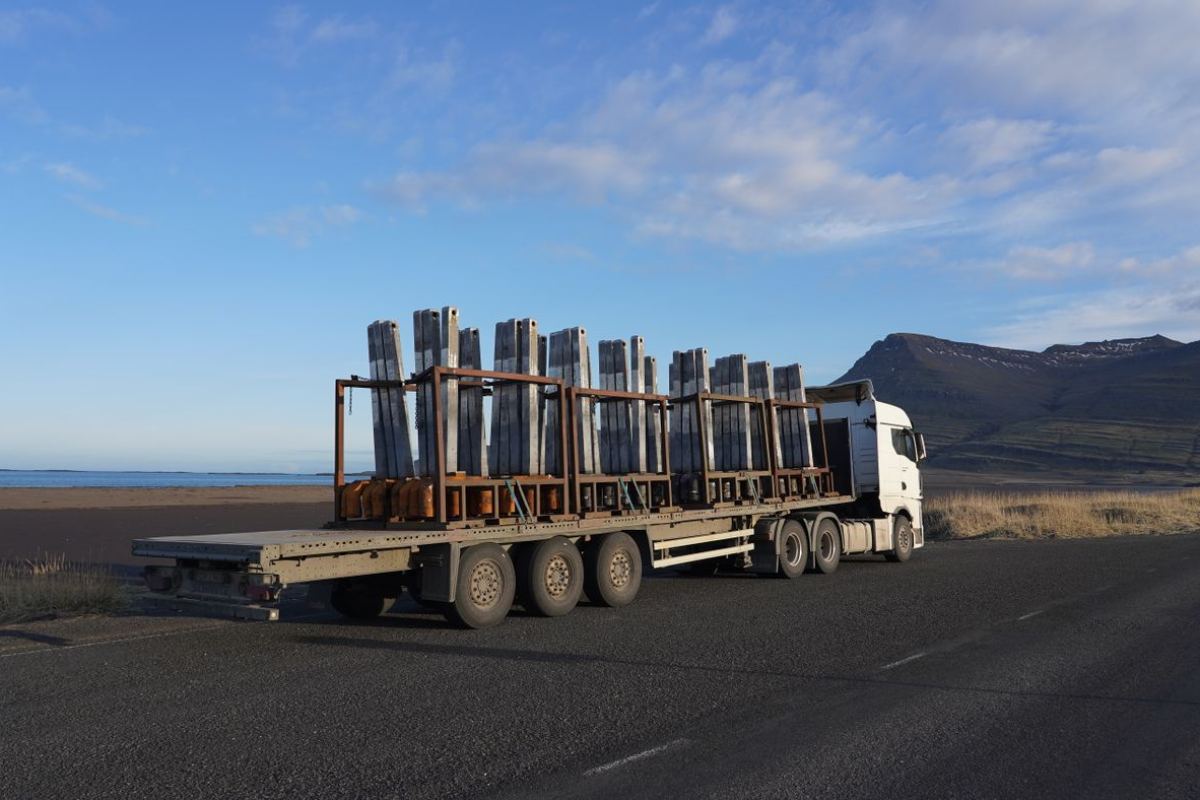
One number governs the design of almost everything we export: 2.35 meters — the internal width of a standard container. Together with its 12 m of usable length and the door height, it defines how anything leaving Indumor for an overseas client gets broken down. A brilliant structure that does not fit a container (or a flatbed, for domestic work) is a brilliant problem.
Logistics does not start at loading: it starts on the drawing. Bolted connections are placed where the structure should split for the trip, members are sized to standard transport, and whatever inevitably exceeds the envelope (a full truss, a large-diameter tank) gets evaluated early: fabricate in halves? is the oversize permit worth it? ship break-bulk instead of containerized? That decision made early costs nothing; made late, it costs a redesign.
Every assembly leaves labeled per the erection drawing, lifting points marked, blocked and lashed so the trip deforms nothing — a badly supported beam arrives with free camber nobody ordered. Galvanized and painted parts travel with separators: a finish scratched in transit gets touched up on site, and that never looks the same. For export we add strapping, moisture protection and a packing list per bundle — the documentation your customs broker will ask for is prepared with the shipment, not after it.
The truck or container gets unloaded in the order things get erected — first pieces on top. Sounds like a detail; it is the difference between erecting the next morning and spending a crane day reshuffling piles. With labeled piece marks and a clear sequence, your erector says thank you and your project moves.
Got a project far away, on a permit-heavy route, or with a short erection window? That is exactly the case where breakdown and logistics should be defined with the fabricator from day one. Write to us before you lock the schedule.
We define breakdown and logistics before fabricating.
© Indumor 2010–2026 — Industrial steel fabrication, Córdoba, Argentina
