October 19, 2026 · Indumor
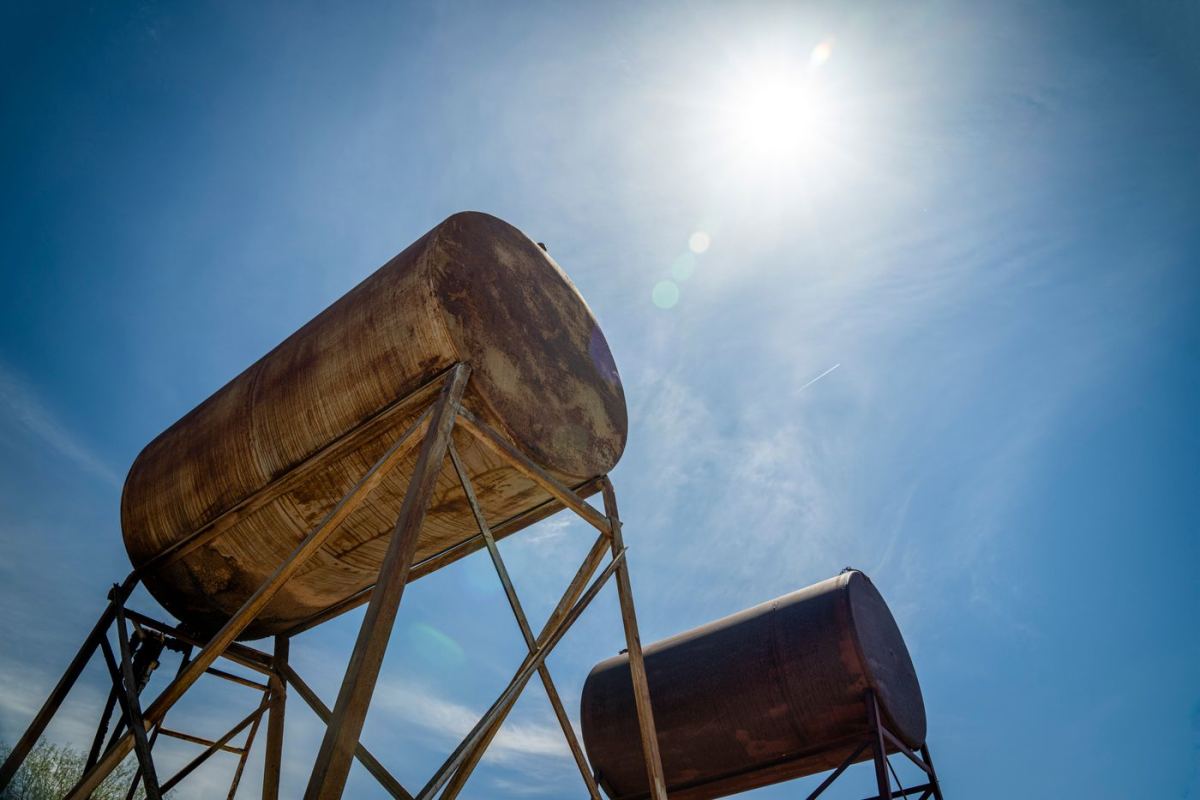
“The tank gives no warning; the inspector does.” Anyone who has watched an old tank emptied for cleaning, only to find a floor like a sieve, says it one way or another. A steel tank can go years showing nothing outside while it corrodes from within or below. That is what inspection is for, and API 653 is what organizes it. These are the questions we hear most.
It is the American Petroleum Institute standard for inspection, repair, alteration and reconstruction of in-service storage tanks built to API 650 or its predecessor. If API 650 says how a tank is built, API 653 says how it stays healthy through its life. One is the birth; the other, the checkups.
For many tanks, yes. Energy Secretariat Resolution 277/2025 requires, for vertical aboveground hydrocarbon tanks of 50 m³ or more covered by the national registry, an inspection and repair plan under API 653, supervised by a certified API 653 inspector, in-house or external. The result is filed as a technical condition certificate. For horizontal tanks and those under 50 m³, the resolution asks the operator to guarantee integrity according to the original design. Full details in Argentina’s tank regulations. The paperwork is not optional.
The resolution sets no frequency, but the standard gives the reference: routine inspections by the owner at least monthly, looking for leaks, deformation and general condition; external inspections by an inspector at most every five years; and internal inspections at an interval driven by measured corrosion rate, with a ten-year baseline that can be extended when the data justifies it. The tank sets the calendar. Not the rush.
It is an operation in itself. The tank must be emptied, gas-freed until the internal atmosphere is safe, sludge removed from the floor and surfaces cleaned so they can be measured. Entering a tank is confined-space work, with permits, forced ventilation, gas monitoring and an attendant outside. That is why it pays to use each outage to inspect, repair and, if needed, reline the tank in a single intervention.
Far more than inspecting. A floor leak can contaminate soil for months before anyone sees it, and remediation often costs more than the tank. Add lost product, facility downtime and, in Argentina since Resolution 277/2025, penalties classified as minor, serious or very serious. Inspection is the cheapest insurance a tank can have.
The shell, measuring thickness by ultrasound to know how much metal is left. The floor, the most critical zone because it is hidden and sits on the foundation: it is scanned with magnetic flux leakage equipment that detects metal loss on the underside. Welds, nozzles, the roof, seals if floating, the foundation and its settlement, linings and coating, and appurtenances: stairs, platforms, railings, vents. Everything that can fail gets looked at. And recorded.
Shop-built tanks, like those made to UL 142 or API 12F guidelines, have their own inspection reference in STI SP001, written for that kind of tank. Even where Argentine rules set no procedure for tanks under 50 m³, inspecting them against a written standard is how you meet the duty to guarantee their integrity. Being small does not make it immune.
API 653 defines how to repair: shell patches, replacement of floor plates or the entire floor, nozzle repairs, shell course replacement and even reconstruction of the tank. Each repair uses qualified welding procedures, gets tested and, for major repairs, may require a new hydrostatic test. The goal is to return the tank to service with technical backing, not a patch job.
The inspection is signed by a certified API 653 inspector. The repair is carried out by a shop that works to the standard, with qualified welders and documentation for every intervention. They are two different roles, and they should be: whoever inspects should not be the one billing the repair unchecked.
A typical case: a diesel tank several years old that had never been inspected inside, with the floor pitted right under the area where water collected. It was caught during an inspection, the affected plates were replaced under procedure, tested, and the tank was back in service within weeks — no spill, no cleanup. If you have tanks needing repair after an inspection, Indumor fabricates the plates, nozzles and fittings with the documentation the standard requires.
The tests used in fabrication and repairs are covered in X-ray and dye penetrant; roof types and their seals in fixed vs floating roof; and our line of industrial tanks, with their fittings.
We fabricate repair plates, nozzles and fittings with documentation.
© Indumor 2010–2026 — Industrial steel fabrication, Córdoba, Argentina
