October 19, 2026 · Indumor
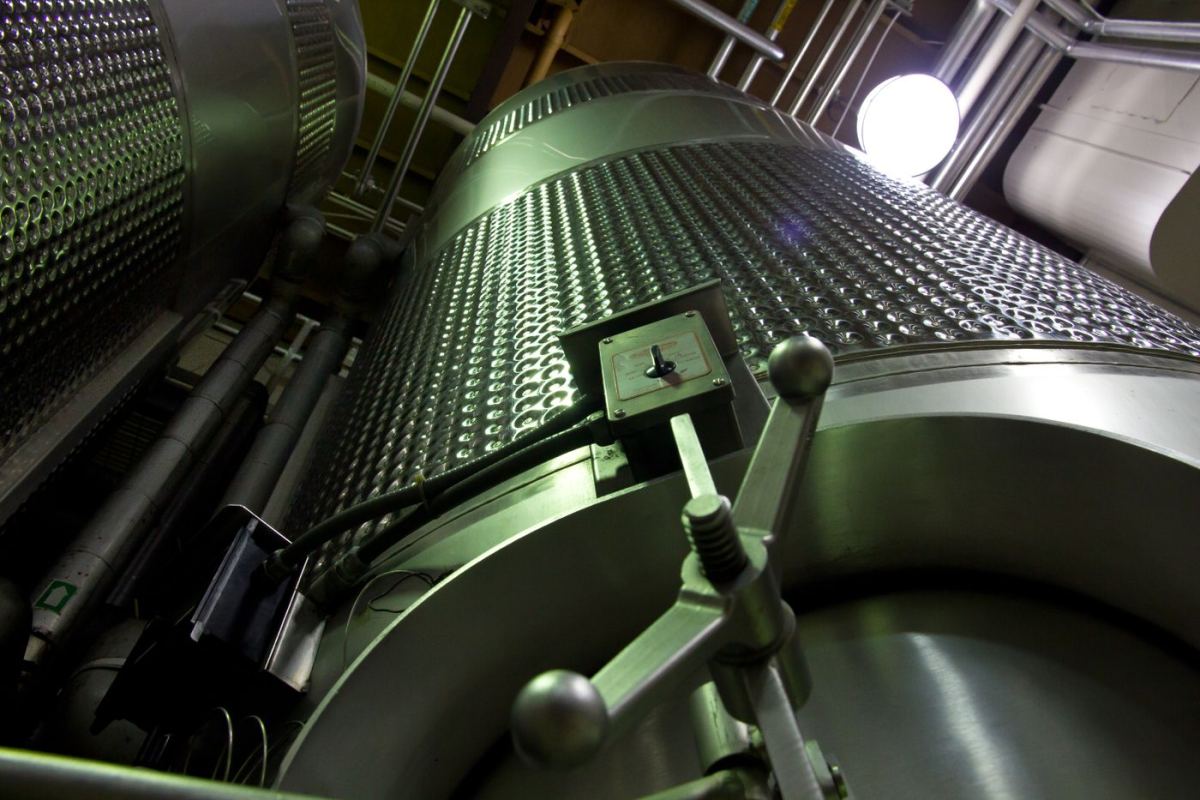
What should a tank be made of? It depends on three things: what it will hold, where it will stand and how many years it must last. With those three answers the material almost chooses itself. Without them, people buy on price or habit — and that is where the trouble starts.
For diesel, fuel oil, lube oils, service water and a long list of industrial liquids, carbon steel is the right answer: strong, easy to weld, repair and source. Tank standards such as API 650 or the UL 142 guidelines define which plates may be used and at what thickness. The key lies in two details. First, the corrosion allowance: a margin — say 1.5 millimeters — is usually added to the calculated thickness, which the tank can “lose” over the years without compromising strength. Second, protection: exterior coating matched to the environment and, when the product calls for it, an internal lining.
Some liquids do not tolerate carbon steel, or carbon steel does not tolerate them. The clearest case is DEF (AdBlue), the 32.5% urea solution modern diesel engines use: ISO 22241 forbids contact with carbon steel, galvanized steel, copper or aluminum, because metals contaminate the urea and damage the vehicle’s system. It goes in stainless or plastic. The same applies to many food products, chemicals and demineralized water. Why not just make everything stainless? Because it costs several times more and, for diesel or service water, adds nothing. Choosing between 304 and 316 is a separate decision, driven mainly by chlorides; see 304 vs 316 stainless.
Galvanizing is excellent for outdoor structures but not for storing diesel: zinc can react with the fuel and form residues that plug filters. It is no good for DEF either. Aluminum shows up in the roofs of large tanks — API 650 has an annex for aluminum domes — and in some light equipment, but it is not the material for a general-purpose fuel tank. In both cases the rule is the same: compatibility first, price second.
Between bare steel and stainless there are middle options. Epoxy or phenolic internal linings protect steel from aggressive products or from water at the bottom. Double wall does not change the material, but adds a second steel shell that contains any leak from the first. For underground tanks there is composite-coated steel and fiberglass-reinforced plastic (FRP), which does not corrode. And polyethylene works for small volumes and compatible chemicals, but it degrades in sunlight, has size limits and does not survive a fire the way steel does.
Even in a diesel tank, enemy number one is usually water: condensation, rain entering through a poorly closed cover, or water carried by the fuel itself. It collects at the bottom and that is where corrosion begins. A bottom sloped to a drain, a manway and a draining routine extend a tank’s life more than any material upgrade.
Material is not chosen only for what goes inside. A tank on the coast, next to a chemical plant or beside a gravel road lives in very different environments. Coastal salt mist calls for thicker coating systems and stainless fittings; industrial atmospheres, chemical-resistant coatings; farms, good protection against sun and dust. A tank’s stairs, railings and platforms are worth galvanizing: they take the most knocks and get repainted the least.
On Argentina’s high Puna, in Patagonia or in a northern winter, minimum design temperature matters: some steels lose toughness well below freezing, and for those cases plates with low-temperature impact testing are specified. DEF freezes around −11 °C (12 °F), so in cold regions the tank needs insulation or heating. And thick products such as fuel oil or certain oils are stored with heating coils and insulation so they can be pumped. Each of those details is decided in design, not afterward.
Choosing well is not enough; you must be able to prove it. Every plate in a well-built tank has its mill certificate stating chemistry and mechanical properties, and its heat number stays identified throughout fabrication. With stainless, the alloy can also be verified by positive material identification, which confirms in minutes that a plate really is 316 and not 304. That is the difference between a tank that claims to be stainless and one that proves it.
A case we see often: a DEF tank built in carbon steel “because it is just water and urea”, which within months stained the product with rust and ended up replaced by a stainless one. The right material from the start was cheaper than the mistake. If you have a liquid and are unsure what to store it in, send us the data sheet: Indumor will recommend the material and quote the tank — with export packaging if needed.
Send the data sheet: we recommend the material and quote the tank.
© Indumor 2010–2026 — Industrial steel fabrication, Córdoba, Argentina
