October 21, 2026 · Indumor
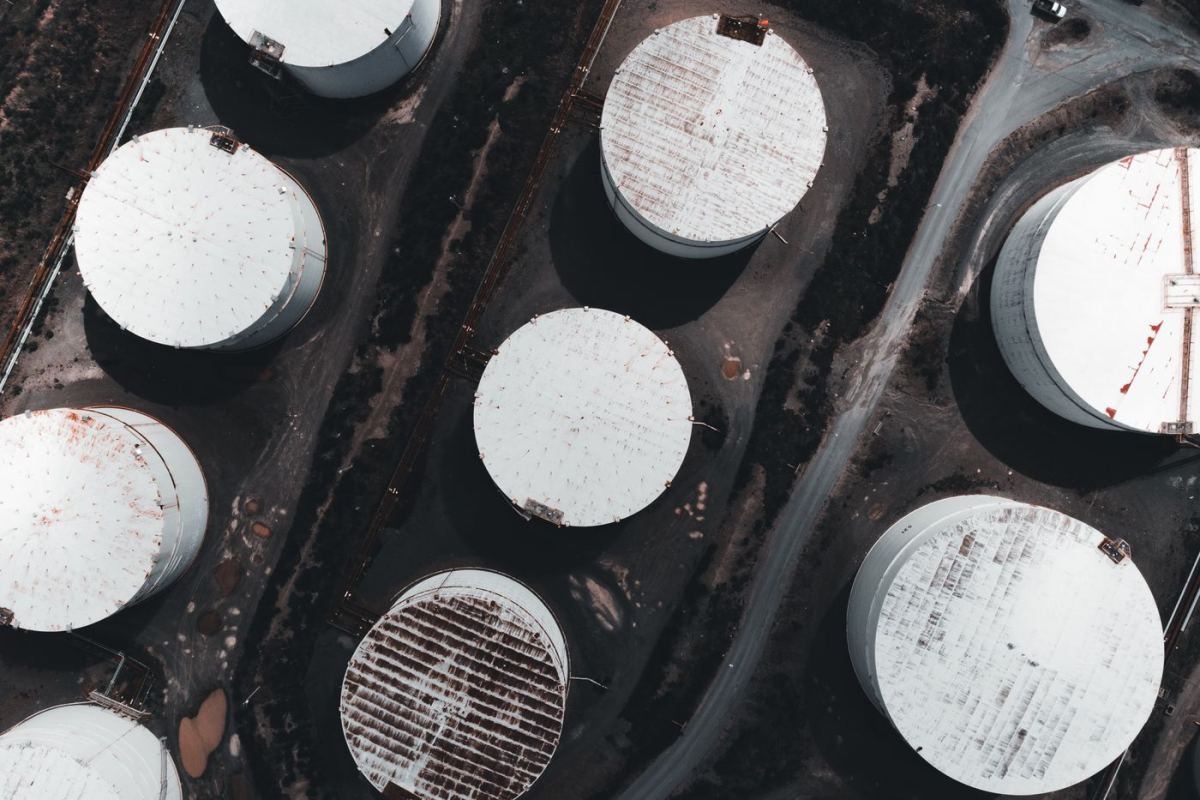
What does a tank do when it is filled? It breathes. As product comes in, the air and vapors inside have to get out; as it is emptied, air has to come in to take their place. And even if nobody touches a valve, the tank also breathes with the sun: during the day the vapors warm up and expand; at night, or in a summer storm, they cool and contract. An atmospheric tank can take very little pressure and even less vacuum, so that breathing needs a way through. That is what venting is for.
Storage tanks built following API 650 guidelines are meant to work at or very close to atmospheric pressure. Their plates are thick enough to carry the weight of the liquid, but the roof and shell are not made to resist any significant internal pressure, let alone a vacuum: outside air pressure, spread over such a large surface, adds up to an enormous force. That is why venting is not an accessory. It is part of the design, and the standard that governs it is API 2000, on venting atmospheric and low-pressure storage tanks.
API 2000 separates two situations. Normal venting, the everyday kind, has to pass the filling and emptying flow plus the thermal effect. Emergency venting is what is needed if there is a fire around the tank and the product starts to boil: then the volume of vapor is far greater than in any normal operation.
The thermal effect deserves its own paragraph, because it gets underestimated. On a large tank, a cold rain on a hot roof contracts the vapors so quickly that the air that has to come in can exceed what the discharge pump pulls at full flow. That is the case that surprises people most: the tank was not even being emptied, and it caved in anyway.
When venting falls short, or is blocked, the tank pays for it. Under overpressure, the roof-to-shell joint is what gives. Under vacuum, the roof or the shell is pulled inward, and a tank emptied with the discharge pump and a blocked vent can end up crumpled like a can. It does not take a big failure: a bird's nest, a screen clogged with paint, ice in winter or product that stuck and dried at the vent opening is enough.
A blocked vent turns emptying a tank into a vacuum test the tank was never made to pass.
There is another, less visible consequence: lost product. A gasoline tank with an open vent breathes vapors all day, and in the sun that is fuel going into the air, money lost and emissions nobody wants. And where there are flammable vapors, an unprotected vent is also a path for a flame.
Venting is selected and sized for each tank. The variables are the product, the volume, the maximum filling and emptying rates and the climate; from those, API 2000 gives the airflow that must be able to pass in each direction. The most common solutions are three:
In practice, sizing the venting takes only a few pieces of data, but they have to be complete: the product and its volatility; the tank volume; the maximum flow of the filling and emptying pumps, including any planned additions; whether the tank is insulated, because insulation greatly reduces the thermal effect; the local climate; and the tank's design pressure and vacuum. With that, the type of vent, its size and its settings are chosen. If one is missing, it gets assumed, and whatever is assumed at the desk shows up later on the roof. Vents also need to be reachable: a vent nobody can get to without a crane is a vent nobody inspects, which is why access platforms and roof guardrails are part of the same conversation.
A pressure-vacuum valve's settings are not picked at random: it has to open well before the tank reaches the pressure or vacuum its design can take, and late enough not to breathe more than necessary. That is why the valve is specified together with the tank, not afterwards. For sensitive products that must not touch air, a nitrogen blanket is added: a regulator feeds inert gas when the tank is emptied or cools down, and the venting works together with it.
A common mistake on small tanks: the vent is run off to one side through a pipe, to carry the vapors away, with elbows and several meters of run, and nobody redoes the math. Every elbow and every meter takes capacity away. Venting is sized as it will actually be installed, with its real run. And in hot climates, color counts too: a light-colored roof heats the vapors less than a dark one, so the tank breathes less and loses less product. White roofs are not a matter of taste; they are a matter of evaporation.
For emergencies, tanks have emergency vent covers that lift under pressure, or are designed with a frangible roof-to-shell joint, which API 650 provides for precisely so that, if something fails, the roof gives and not the bottom, and the product stays inside. Horizontal fuel tanks built following UL 142 guidelines also carry normal and emergency venting: the size changes, the principle does not.
And then, maintenance. Vents get checked on every round and at every inspection: clean screens, valves that open and close, nothing stuck on the seats, emergency covers free to lift. Screens get cleaned, not removed: a vent without its screen is an invitation to birds. It is a few minutes' work that prevents the worst ending. And if the tank changes product or pumping rate, the venting gets reviewed again: what was enough for diesel may not be enough for gasoline, and what was enough with one pump may not be enough with two.
The tanks we build at Indumor ship with venting sized for their service: tell us the product and the filling and emptying rates when you request a quote. And if you have tanks in service and are not sure the venting is enough, send us the same data and we will tell you what applies, at no charge.
Send us product, volume and filling and emptying rates, and we will tell you what applies.
© Indumor 2010–2026 — Industrial steel fabrication, Córdoba, Argentina
