October 19, 2026 · Indumor
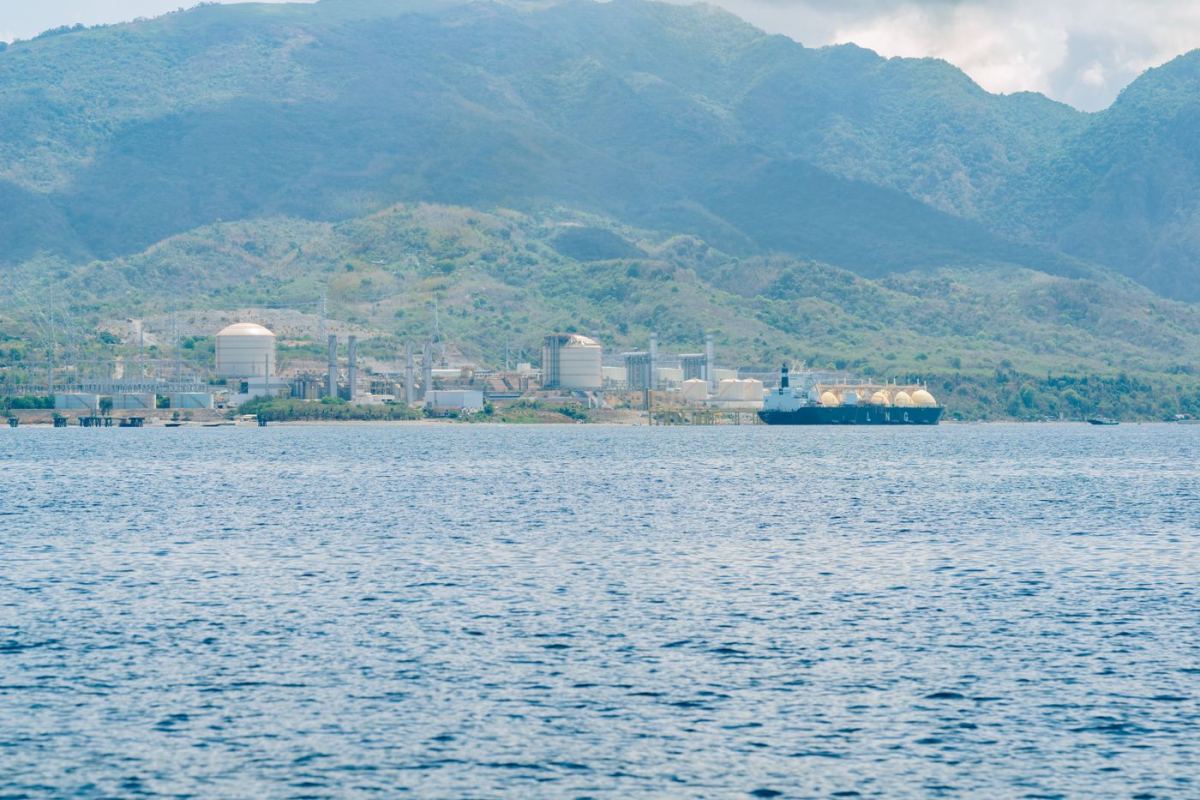
Liquefied natural gas is set to turn Vaca Muerta into a gas exporter to the whole world, and the most visible part of the business — the liquefaction vessels — is built abroad. But around each vessel there is onshore work built here: pipelines, stations, bases, structures and decades of maintenance. That is the conclusion. The rest is how we get there.
Cooled to about minus 162 °C, natural gas turns liquid and takes up roughly six hundred times less volume. That way it can be loaded onto LNG carriers and sold to any country with a regasification terminal, without depending on a pipeline. For a country with as much gas as Argentina, liquefying it is the key to selling it worldwide — especially in the months when domestic demand falls.
The first project under way is Southern Energy, a consortium of Pan American Energy, YPF, Pampa Energía, Harbour and Golar. Instead of an onshore plant, it uses floating liquefaction vessels: the Hilli Episeyo, with about 2.45 million tonnes a year of capacity, was being refurbished in 2026 and would reach the San Matías Gulf in the second half of 2027, with commercial operation around year-end; a second vessel of 3.5 million tonnes would arrive by late 2028. The consortium has already signed a contract with Germany’s SEFE for two million tonnes a year over eight years. To feed the vessels, a dedicated pipeline of about 472 kilometers and 36 inches is being built from Tratayén, approved under the RIGI in 2026.
The second project is much bigger. Argentina LNG — YPF with Italy’s Eni and XRG — plans an investment of about US$51 billion and two liquefaction vessels for 12 million tonnes a year, expandable to 18. Its final investment decision was announced for November 26, 2026, and the project was filed with the RIGI. If it proceeds, it would be the largest investment in the country’s history.
Floating liquefaction has a decisive advantage for a country that wants to export fast: the vessel arrives built. Instead of spending years raising a liquefaction plant on the coast, an existing unit — or one built at a specialized yard — gets moored and connected to a pipeline. That shortens timelines and reduces onshore construction, though it does not eliminate it. It also allows phased growth: one vessel first, another later, as sales contracts firm up.
Until now, Argentine gas had a clear ceiling: domestic demand, which spikes in winter and drops in summer. LNG breaks that ceiling. With a dedicated pipeline of 28 million cubic meters a day to the San Matías Gulf, producers can keep activity steady year-round and sell the surplus abroad. That means more gas wells, more treatment and compression plants in the basin, more gathering lines — more work for the whole chain, from Añelo to the Río Negro coast.
The San Matías Gulf will host two of Argentina’s largest energy projects: oil leaving through the Punta Colorada terminal near Sierra Grande, and LNG loaded onto vessels moored off the Río Negro coast. For the region — San Antonio Oeste, the port of San Antonio Este, Sierra Grande — that means years of demand for services, workshops, logistics and labor. It also means responsibility: this is a coast with tourism and fishing, where environmental care is part of the project, not an add-on. The works will be held to demanding standards, and suppliers have to rise to them.
A liquefaction vessel does not work alone. It needs the pipeline feeding it, with valves, pig traps and metering stations; conditioning facilities where required; the connection between shore and vessel; logistics and maintenance bases; workshops, warehouses, camps, water and firewater tanks; and all the auxiliary equipment. It is infrastructure work lasting years, followed by permanent maintenance.
In the shop, gas imposes its discipline. A high-pressure gas spool is welded under a qualified procedure, tested, hydrotested and documented before it ships; every plate and pipe carries its heat number in plain view; and the dossier travels with the piece. There are no shortcuts, and that is how it should be.
With the first vessel in 2027, the second in 2028 and the Argentina LNG decision at the end of 2026, onshore purchasing is being decided now. In this business, you snooze, you lose: packages go to whoever is already qualified when the tender drops. Pipeline details are in gas pipelines and compressor stations, and the basin feeding everything in Vaca Muerta. If you are building a bid for LNG onshore works, Indumor adds piping, supports and structures with complete documentation — in English. Write to us this week.
Piping, supports and structures with complete documentation.
© Indumor 2010–2026 — Industrial steel fabrication, Córdoba, Argentina
