October 19, 2026 · Indumor
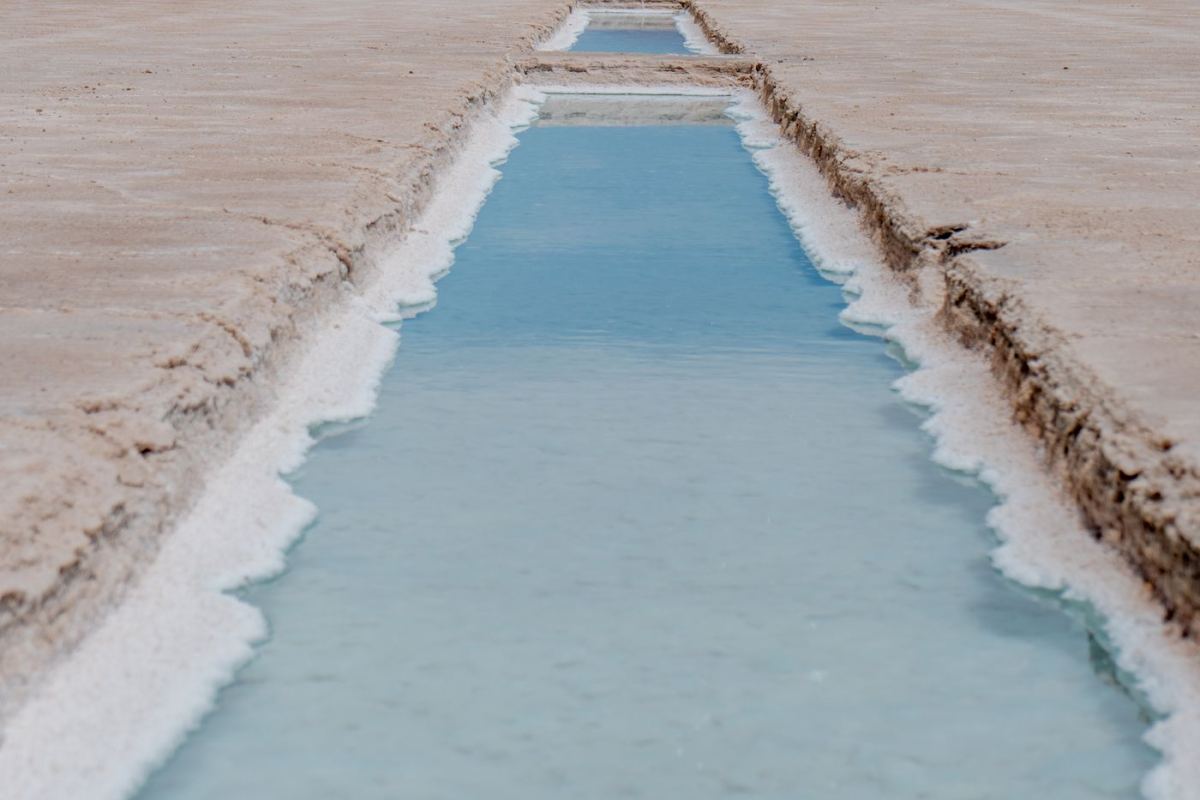
1,200 hectares. That is the evaporation pond area at Cauchari-Olaroz, in Susques department, Jujuy province, at 3,940 meters: more than ten square kilometers of brine exposed to the Puna’s sun and wind, so the water leaves and the lithium stays. Next door, separated only by National Route 52, sits Olaroz. Together they account for much of the lithium Jujuy exports.
Both produce lithium carbonate from brine, both rely on ponds and both are growing. But they got here by different roads, and comparing them is the best way to understand what Jujuy mining buys today.
Cauchari-Olaroz is run by Minera Exar, owned by Ganfeng, Lithium Argentina and Jujuy’s state company JEMSE. It has capacity for 40,000 tonnes a year and ran at about 95% of that in the first half of 2026. Its infrastructure speaks for itself: 43 brine wells, a 33 kV line tying into a 345 kV line some 60 kilometers away, a 16.4 MW demand, gas from the pipeline running to Chile, 105 liters of water per second and a camp for about a thousand people. In May 2026 its second stage entered the RIGI with US$1.241 billion to add 45,000 tonnes a year, starting with a 10,000-tonne first module using direct lithium extraction.
Olaroz, from Sales de Jujuy — now majority-owned by Rio Tinto — is the area’s pioneer. With its second stage, first producing in 2023, it reached about 42,500 tonnes a year of nameplate capacity. In the third quarter of 2026 it went through its annual maintenance and felt the effect of weather events that lowered lithium concentration in the ponds — a reminder that sun and rain are part of the process too.
For a supplier, it helps to separate what the ponds buy from what the plant buys. Ponds live on pumps moving brine from one pond to the next, on kilometers of piping — much of it polyethylene — and on light structures: pump frames, walkways, supports and electrical rooms. The carbonate plant, by contrast, is a complete chemical industry: reagent tanks, reactors, filters, dryers, lime and soda ash silos, product warehouses and steel buildings. That is where most of the fabricated steel goes.
Further north, Mina Aguilar announced in October 2026 a new lead-zinc-silver orebody that would keep it producing from 2030 to 2043, and Chinchillas keeps feeding the Pirquitas plant. Mining in Jujuy is not only lithium.
Ponds remain the base, but growth comes from the new modules, and new modules lean toward direct extraction: more chemical plant, more tanks, more piping, more structure per tonne. For a supplier, demand shifts from the kilometers of pond piping to process assemblies that get built, tested and shipped complete. And the Puna does not forgive shortcuts: whatever was not pre-assembled in the shop gets assembled at 3,940 meters, in wind and cold, at several times the cost.
Logistics matter too. Susques sits on Route 52, the road to the Jama Pass and Chile’s Pacific ports; San Salvador de Jujuy is about 250 kilometers away. Everything fabricated for the area is designed around that trip: breakdown to truck size, lifting points, protection against dust and cold. The inside of a lithium plant is covered in what gets fabricated for a lithium plant; the neighbor to the south in mining in Salta; and the wider northwest in mining in Catamarca.
Next time you drive through Susques toward Jama and see those turquoise ponds in the middle of the salt flat, think of everything you cannot see: pumps, tanks, piping and structures someone built far away and hauled up there. If your next Puna project needs that steel, Indumor builds it designed for the trip — and quotes in English.
We build pre-fitted, tested assemblies designed for the trip and high-altitude erection.
© Indumor 2010–2026 — Industrial steel fabrication, Córdoba, Argentina
