October 19, 2026 · Indumor
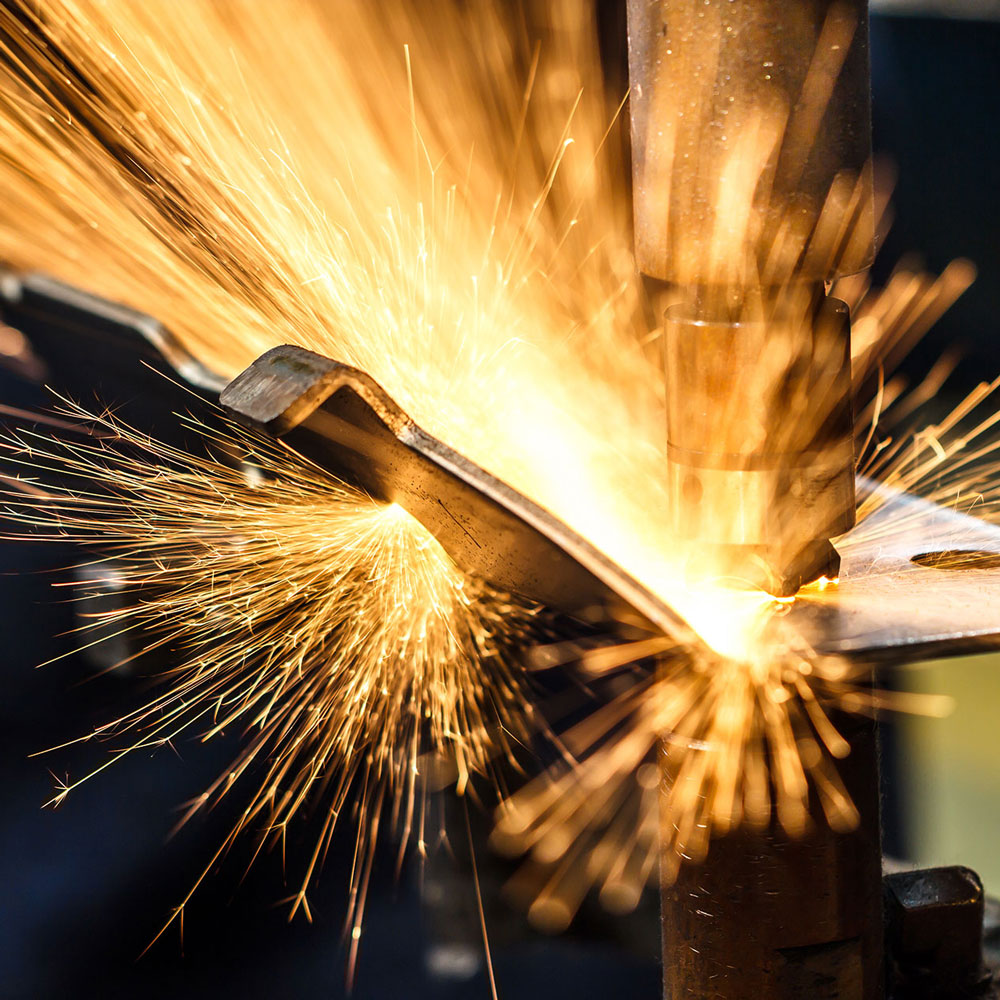
Let us start by killing the myth: boilermaking is not the boiler business. The name survives from the 19th century, when boilermakers hammered steam boilers into shape, but today it names something else: the craft of shaping plate — especially heavy plate — into volumes: tanks, hoppers, ducts, cyclones, housings, large weldments.
The plate worker is the one who looks at a flat drawing and sees the three-dimensional object: how to develop a cone in sheet, where each bend and each rolling pass goes, how to fit a shell course so it closes true, and in what sequence to weld so the assembly does not twist itself. It is the difference between cutting parts and building volumes — a craft learned more on the shop floor than in books.
How does it differ from structural work? Structural work handles profiles and bars: frames, gates, light structures. Plate work handles sheet developments and closed volumes. A warehouse is structural; the silo next to it is plate work. In practice they share a shop — in ours, the plate worker and the welder share a bench, which is why the same crew builds containers, cold room equipment and tanks alongside structures.
If you were ever quoted "heavy plate work" and wondered whether that was your thing: if your part is a volume of sheet — it contains, conducts or encloses something — it is plate work. Now you know what to call it.
Then it is plate work, and it is our thing: tell us.
© Indumor 2010–2026 — Industrial steel fabrication, Córdoba, Argentina
