October 21, 2026 · Indumor
Choosing a baghouse fabric is a lot like choosing what to wear for welding. A cotton shirt shrugs off a spark; a polyester one melts and sticks to your skin. Filter bags work the same way, except the spark is the gas temperature, and you do not always see it coming. Every fiber has a temperature limit and, on top of that, a chemistry it will not tolerate.
Before looking at fabrics you need three facts about the gas: its maximum temperature in continuous operation, its humidity and what it carries — acids, alkalis, oxygen, nitrogen oxides. And you have to tell the operating temperature apart from the peaks: fabric makers quote both, and they are not the same thing.
The continuous temperature is the one that rules. Choosing a fabric by the surge it can take for a few minutes is the fastest way to replace the bags early.
The other fact is the dew point. If the gas or the filter's steel drops below it, water or acid condenses on the cloth and blinds it within minutes or hours. No fiber survives that: the fix is insulating the housing and warming the filter up before dust arrives.
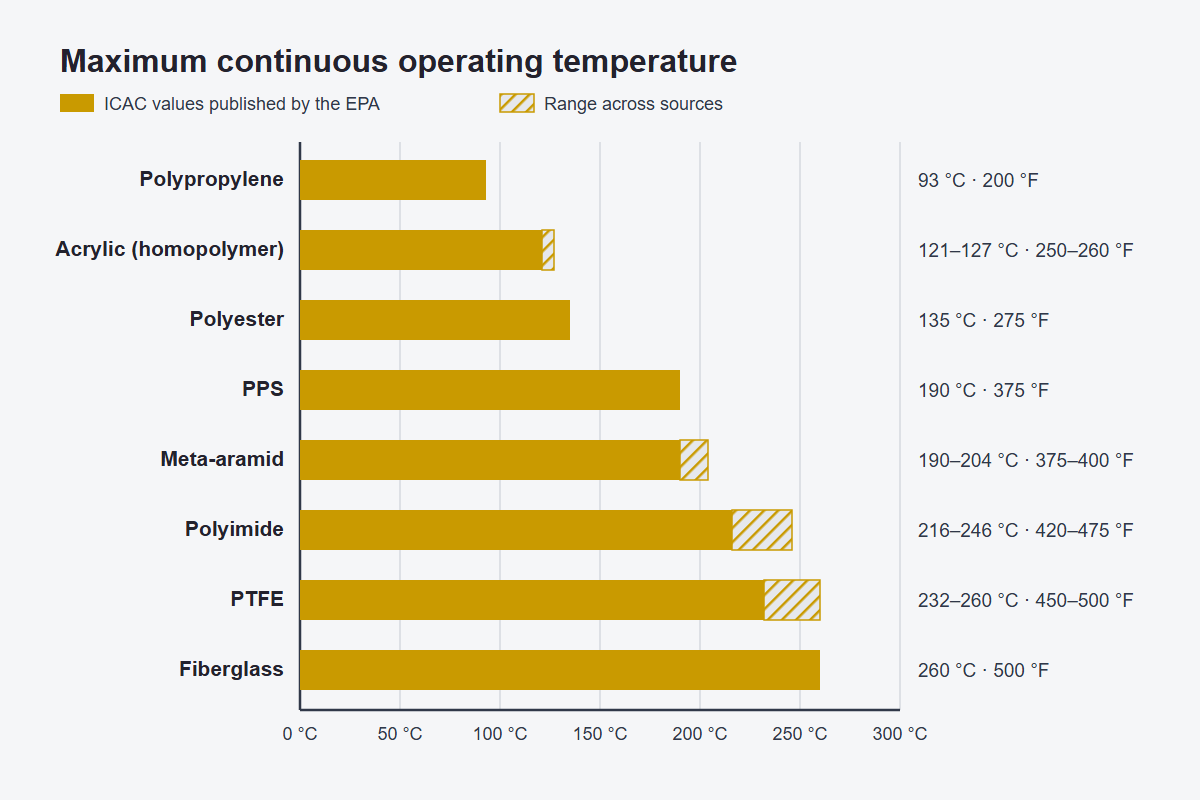
These are the continuous operating limits recommended by ICAC, the US association of emission control equipment makers, and published by the EPA. Where fiber manufacturers give a different figure, the range is shown:
Expanded-PTFE membranes deserve a paragraph of their own. Laminated onto the fabric, they filter at the surface: they catch fine dust better and release the cake more easily. But they do not raise the temperature limit, which is still set by the fabric underneath.
A well-chosen fabric is ruined just the same if the filter starts up cold and damp, if a spark reaches the bags or if the differential pressure climbs and nobody looks. That is why, besides the fabric, preheating at start-up, a pre-separator when there are sparks and a differential pressure gauge in plain sight all matter.
If you are working out a whole filter, the guide to sizing a baghouse has the rest of the math; if you are still unsure about the equipment, cyclone or baghouse compares the two; and the history of dust collection tells how industry went from hand-shaken cotton to these fibers. At Indumor we build baghouses and help you choose the fabric with these facts.
Next time you order filter bags, bring three facts in writing: the gas's continuous temperature, its humidity and the chemistry it carries. With those three numbers, the fabric all but chooses itself.
Tell us the gas temperature and chemistry, and we will tell you which fabric fits the filter.
© Indumor 2010–2026 — Industrial steel fabrication, Córdoba, Argentina
