October 19, 2026 · Indumor
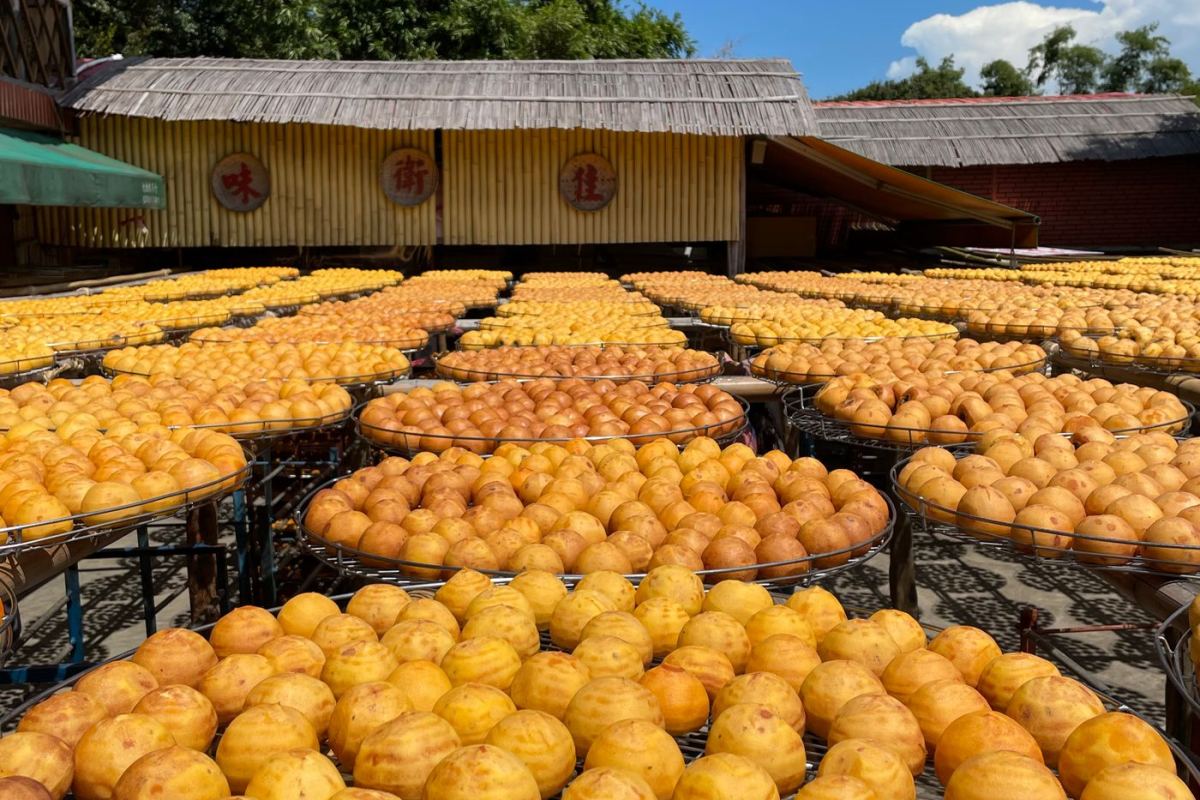
“The sun is free.” That is the first thing we hear when a fruit grower starts thinking about a drying tunnel, and there is something to it: the sun never sends an invoice. What it sends is something else. Seven to twelve days of drying in the open, with one eye on the forecast, plus dust, insects and fruit that never comes out even. A tunnel does the same job in a day. These are the questions we hear most, with the answers we give.
The list is longer than it looks. The leader is the prune from Mendoza, above all from the southern part of the province around San Rafael, which is mostly dried in tunnels. Peaches, apricots and pears are dried too; raisins from San Juan, still mostly sun-dried on racks; peppers for paprika from the Calchaquí valleys of Salta and Catamarca, traditionally sun-dried; tomatoes; dehydrated garlic and onion for the food industry; and herbs such as oregano. Each product has its own temperature, time and final moisture.
Time, quality and risk. In the sun a prune takes seven to twelve days; in a tunnel, 16 to 24 hours. In the sun, rain at the wrong moment ruins a whole batch; in the tunnel, outside weather does not get in. And the product comes out more even, cleaner and more uniform in color, which is what demanding buyers pay for. The industry has already done this math: in Mendoza, the number of prune drying plants fell from 498 in 2009 to 133 in 2021 as production concentrated in larger, better-equipped plants.
It depends on the product. For prunes, process air in gas-fired tunnels typically runs between 65 and 85 °C. Vegetables and herbs, which must keep color and aroma, are generally dried more gently. A well-designed tunnel does not run at a single temperature: it has zones, hotter where the product still holds a lot of water and gentler at the end, when the surface is already dry and the risk becomes burning or hardening it.
A lot. A fresh plum is around three quarters water by weight, and the dried prune leaves at 18 to 22% moisture, with a water activity that ensures shelf life. In practice it takes three to three and a half kilograms of fresh fruit to make one kilogram of prunes: everything else evaporates in the tunnel. That math sizes the whole system: tray area, number of trucks, airflow and the size of the heat source.
A truck-and-tray tunnel works in batches: trucks loaded with trays enter one end and leave the other as they dry. It is the most used for seasonal fruit because it adapts to different products and grows by adding trucks. A belt tunnel runs continuously: the product, usually diced or sliced, travels on one or several stacked belts. It suits large, steady runs of a single product, such as dehydrated onion or garlic. In both versions, trays, belts and every surface touching the food are stainless steel. Both formats, with their zones and air recirculation, are on our tunnel dryers page.
It can, and much of the industry does it that way: according to work from Argentina’s National University of Cuyo, more than half of prune drying plants use natural gas ovens. But the same work flags a problem: with direct gas firing, combustion residues end up on the fruit skin and hurt quality. The alternative is a heat exchanger: the burner heats tubes that the drying air passes over, and combustion gases leave through the stack without touching the fruit. It costs somewhat more and gives up a little efficiency, but the product only sees clean air.
Whatever is available and cheapest per useful calorie. Natural gas is convenient, but energy already accounts for about a quarter of the cost of producing prunes, and that share grows with every rate increase. That is why more and more plants are looking at biomass: prunings from their own orchards, fruit pits, chips. With a biomass furnace and a heat exchanger, the tunnel dries with a residue that used to be burned in the field or hauled away at a cost. The full comparison, with heating values and the math on insulation, is in fuels and insulation for industrial dryers.
It depends on the product. Prunes are washed and sized before the trays are loaded. Apricots and peaches usually go through sulfuring to keep their color. Grapes for raisins get a dip that breaks the waxy layer on the skin and speeds drying. None of those steps is part of the tunnel, but all of them take up space next to it: the layout has to plan where trays are loaded, where they drain and how trucks move without crossing paths with fruit that has already come out dry.
You work backwards. Daily kilograms of fresh fruit and the load each square meter of tray can carry while still letting air through give the tray area required; drying time gives how many batches fit in a day; and from there come the number of trucks, the tunnel length and the fan airflow. If the season is short and output is high, plan for extra trucks: a loaded truck waiting its turn is fruit going past its prime.
Rushing it. Do not do this: raise the temperature to finish the batch sooner. The fruit surface dries all at once and forms a crust, and the water in the center gets trapped; the product comes out hard outside and moist inside, and that moisture shows up weeks later as mold in the warehouse or on the shelf. The effect has a name — case hardening — and it is avoided with well-staged temperature zones and controlled air humidity, exhausting air once it is loaded.
One last recommendation: a well-built tunnel runs for many seasons, so size it for the output you expect a few years from now, not just this harvest. Send us those details and at Indumor we will quote the complete tunnel, heat source included, ready for next season.
We quote the complete tunnel, heat source included, for next season.
© Indumor 2010–2026 — Industrial steel fabrication, Córdoba, Argentina
