October 21, 2026 · Indumor
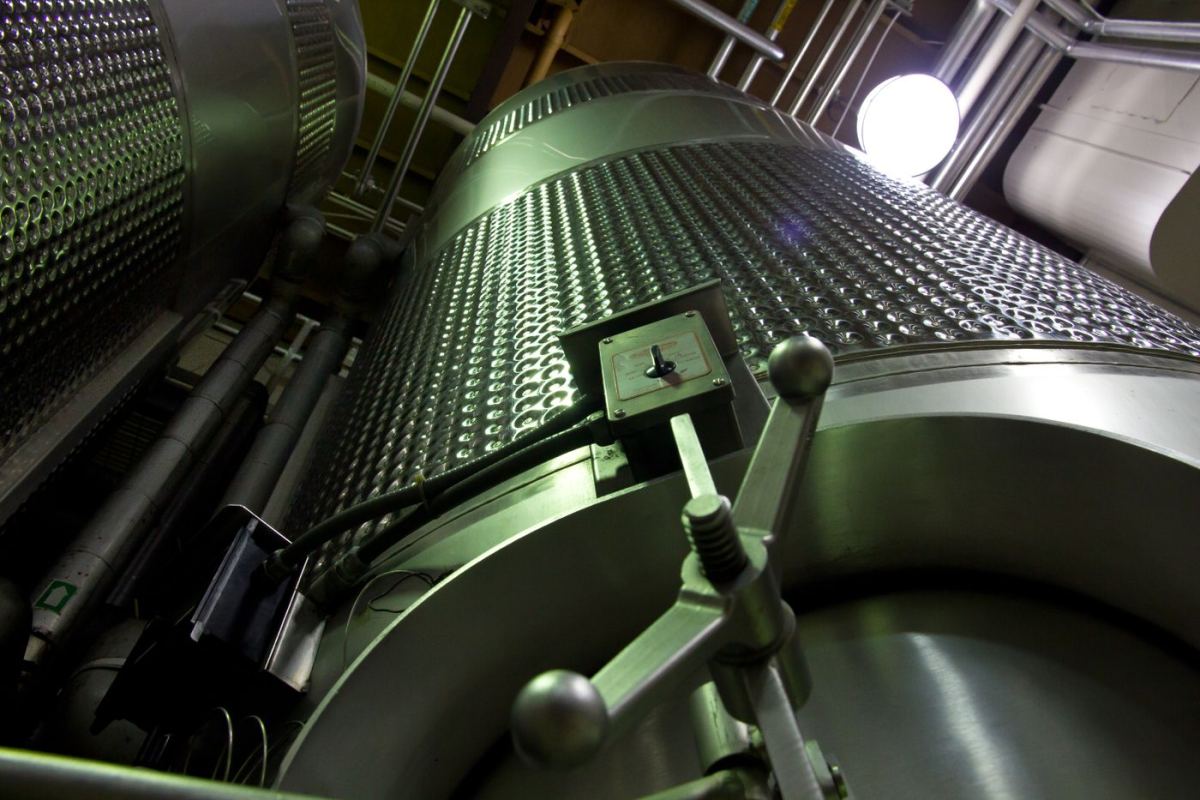
It happens more often than you would think. A stainless tank leaves the shop shining, gets installed, and a few months later brown stains appear alongside every weld, as if someone had traced them with rust. The call comes in, angry: they paid for stainless and it is rusting. And they are partly right. The steel is the right one. What was missing was the work after welding.
Stainless does not rust because it contains at least 10.5% chromium. That chromium forms an extremely thin, invisible oxide layer on the surface that repairs itself with the oxygen in the air: the passive layer. It is not magic. It is chemistry, and it can be ruined in the shop in two ways.
The first is welding heat. Next to the bead, a tint forms that runs from straw to blue to dark brown: heat tint. That oxide layer is thicker and more porous, and underneath it leaves a band of metal that has lost part of its chromium. That is exactly where corrosion starts. The second is iron contamination: a wire brush that was used on carbon steel, a shared grinding disc, sparks from the bay next door. That iron gets embedded in the surface and rusts like iron, because that is what it is. That is why stainless is worked with its own brushes and discs, ideally in a separate area of the shop.
Pickling removes the heat tint and the chromium-depleted layer. It is done with acids — usually mixtures of nitric and hydrofluoric acid, as a paste, gel or bath — or electrochemically. Pickling paste works very well, and it is no place to cut corners: it contains hydrofluoric acid, it calls for gloves, a face shield and ventilation, and the rinse water is neutralized and treated; it never goes down the drain.
Passivation comes next, or on its own when there was no welding: a treatment with nitric or citric acid that removes free iron from the surface and helps the passive layer form evenly. The practices are described in standards such as ASTM A380 and ASTM A967. Afterwards the part is rinsed with clean, low-chloride water and dried.
It can be verified. Besides checking that no tint is left, there is the ferroxyl test, which reveals free iron as blue spots. And if the part is going into food processing, the finish matters too: a smooth, well-passivated surface cleans better and holds less.
The mechanical alternative — grinding and polishing off the tint — works, but it leaves a rougher surface, and passivating afterwards is still a good idea. What does not work is doing nothing. Untreated stainless is only half stainless.
The next time you see a brown stain next to a stainless weld, you will know it is not the steel: it is the work that was skipped after welding. If you are choosing the material, see 304 vs 316; for food, stainless in the food industry; and for a tank, tank materials. Questions about your equipment? Write to us at Indumor.
Tell us the service and the environment, and we will recommend material and finish.
© Indumor 2010–2026 — Industrial steel fabrication, Córdoba, Argentina
