November 2, 2026 · Indumor
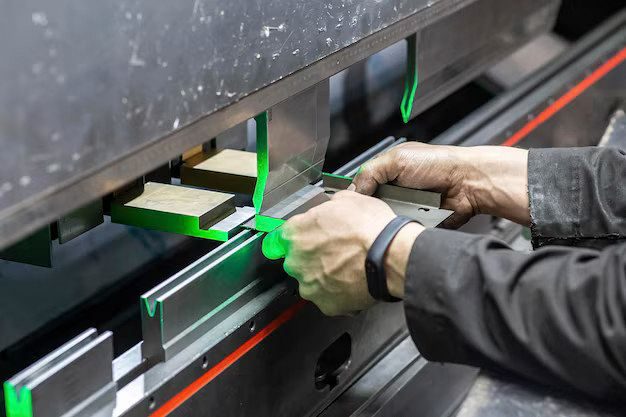
"So what would it cost to make one just like it?" The question arrives together with the photo of the machine, sometimes before hello. The honest answer has two parts: what the machine is made of, and how many you are going to build. This guide takes the budget apart line by line and sets it next to the other option, buying new, so that the verdict is yours and not the salesman's.
| Line | What it is | What it depends on |
|---|---|---|
| Survey | Measuring, photographing and taking the original machine apart. | The number of parts, and whether the machine can be stopped or has to be surveyed while running. |
| Engineering | CAD modelling, calculations and shop drawings. | The number of different parts, not the size. A big hopper is little engineering; a small head can be a lot. |
| Materials | Plate, sections, bars and pipe. | The weight and the material. Stainless costs several times what carbon steel does. |
| Cutting and bending | Laser-cut and press-brake formed sheet. | Cheap per part when there is repetition; the laser cuts holes and marks in the same pass. |
| Machining | Shafts, bushings, housings, bearing faces. | The tolerances. Every hundredth of a millimetre the drawing demands is machine time and inspection time. |
| Treatments | Hardening, carburizing, nitriding, galvanizing, paint. | Which parts wear, and the environment the machine goes into. |
| Bought-in components | Motors, gearboxes, bearings, chains, drives, PLC, sensors. | The level of automation. On a machine with many commercial components they can be half the total. |
| Assembly and testing | Fitting, aligning, wiring, running empty and with material. | Complexity, and whether the test run happens in the shop or at your plant. |
| Documentation | Final drawings, spare parts list, manual. | It is what lets you build the next one without starting over. |
Repeated parts, because ten identical brackets come out of a single sheet and get bent one after another. Standard components, because a catalog bearing is bought off the shelf and a special one is waited for. Formed sheet where the original used machining, when the function allows it. And above all, quantity. The second unit costs a good deal less than the first because the survey and the engineering are already paid for, and from the third one on the copy starts to behave like series production.
Tight tolerances, which turn a simple part into an expensive one. One-off castings, because you cannot order a single piece from a foundry: they have to be redesigned as welded and machined parts, and that is extra engineering. And proprietary electronics. A control board that only the machine's maker produces forces you to replace the whole control system with an off-the-shelf PLC and drives, with a program written from scratch by a programmer who first has to understand the machine.
Warning: a copied machine with the electrical side left "for later" is not a machine, it is a lump of steel. The panel and the program get budgeted from day one.
In favour, the machine is built for your process, with the improvements you already know the original lacks. The drawings stay in your hands. Every spare part gets made around the corner. And the price does not travel in a container, pay import duties or wait for a technician flying in from another continent.
Against, the first unit carries all the engineering. The lead time includes the survey and the test runs, two stages that do not exist when you buy from a catalog. And the warranty is that of the shop that built it, not that of a factory with a hundred units in the field.
In favour, a known price before you start, a delivery date, a warranty and, if the maker is serious, spare parts and service. For a catalog machine built by the thousand, the series price is hard to match.
Against, the machine is the catalog's and not yours, and you pay for adaptations separately. Spare parts cost what the maker decides and take as long as the ship takes. And if the maker disappears, changes business or drops the model, you are left with an orphan machine, which is precisely the one that later turns up at the shop to be copied.
A third option, and a short one. When what fails is one part and the rest is sound, repairing or copying just that part wins almost every time; the guide on spare parts without drawings shows how. Copying the whole machine makes sense when the wear is general or when, besides the one you have, you need another.
A serious reverse engineering quote comes in two parts. The first is the survey and the engineering, at a fixed price, and it ends in a set of drawings and a bill of materials and components that is yours even if you never go on to build. The second is the fabrication, with the weight of every part, the machining, the treatments, the bought-in components and the test runs laid out as separate lines, so that you can compare and so that it is clear what changes if you order two units instead of one. If someone quotes both stages as a single closed figure before seeing the machine, they are guessing.
Lead times split the same way. The survey takes days, the engineering takes weeks, and the fabrication depends on the weight, the machining and the delivery times of the components, which sometimes matter more than the shop does. For a first quote to be useful it is enough to send photos of the machine from all four sides and of the nameplate, the overall dimensions, what it produces and at what rate, what you want changed and how many units you have in mind.
Copying wins when the machine is mechanical and simple, when it is large, when it has no spare parts or no maker left, when you are going to build several units, or when the original has things you want to change. Buying wins when it is a cheap catalog machine, when the electronics are complex and proprietary, when you need it next month, or when the warranty is worth more than the price difference. If you want to sharpen the numbers before asking for a quote, the guide on estimating steel weight covers the structural part, and the one on how to request a quote helps make offers comparable.
The case that comes up most often at the shop is the second unit. A plant has an imported machine running well, needs it duplicated and finds out the maker discontinued it. The existing one gets surveyed, the two or three things the operator already knows are wrong get corrected, and the copy starts up next to the original, with the sheet metal cut and bent here and the panel built from scratch. If that is your case, send us photos, overall dimensions and what you want changed, and at Indumor we quote the survey and the machine separately, so you know what each part costs before you decide; industrial reverse engineering explains how we work.
Survey, drawings and fabrication of the copy in Córdoba, Argentina.
View service →With photos and overall dimensions we quote the survey and the fabrication separately.
© Indumor 2010–2026 — Industrial steel fabrication, Córdoba, Argentina
