October 31, 2026 · Indumor
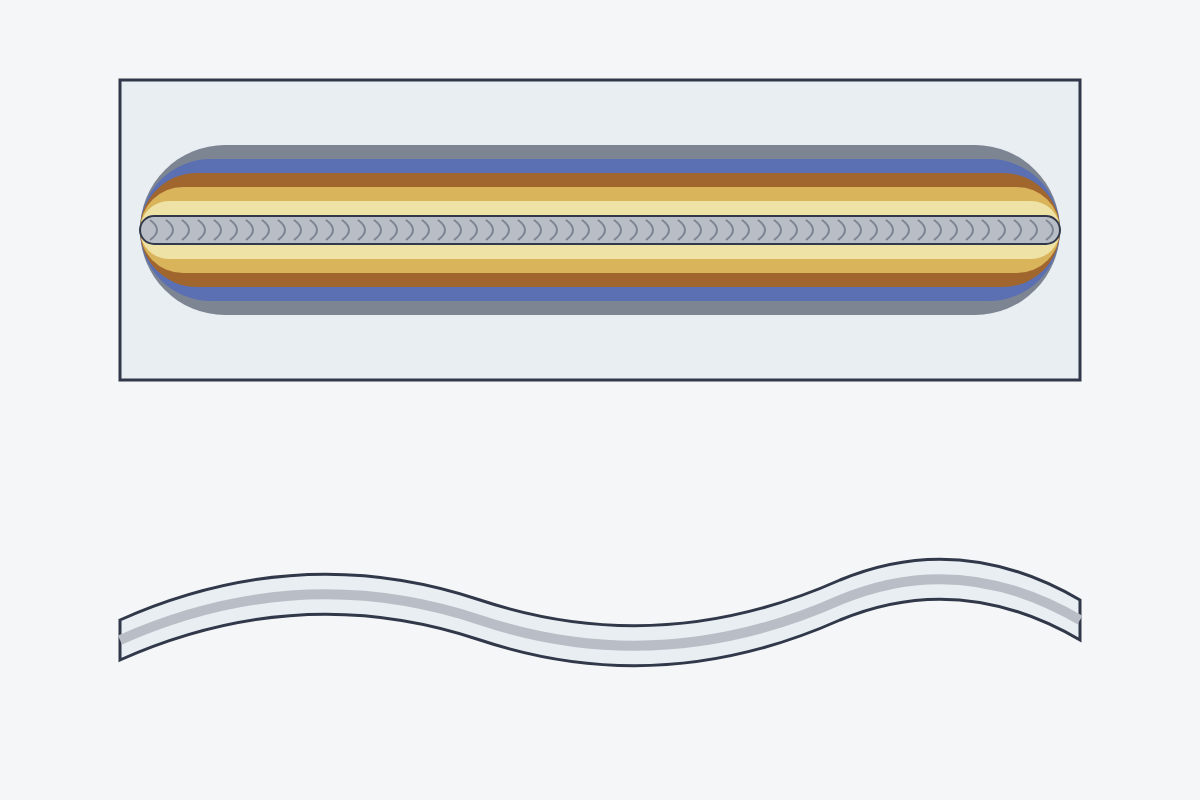
Above, the color bands heat leaves beside the bead: silver, straw, brown, blue and gray, from least to most oxidation. Below, a stainless sheet distorted by too much heat.
A freshly polished tank waits on the shop floor, bright as a mirror, and around it nobody uses the grinder from the plain steel parts. The stainless wheels and brushes have their own drawer, the tables are covered, and anyone coming over from the structural bay changes gloves before touching anything. It looks excessive until you see a rust stain appear weeks later on spotless stainless, right where someone set down a tool carrying iron filings. TIG welding stainless is, above all, a discipline.
Austenitic stainless, types 304 and 316, conducts heat about three times worse than ordinary steel and expands about 50 % more. The heat stays near the bead and the part distorts more. That is why it is welded with low heat input: short beads, small and well-spaced tacks, alternating sequences and an interpass temperature that many procedures limit to about 150 °C (300 °F). And that is why the L grades are used: low in carbon, they do not form chromium carbides in the hot zone and are not left sensitized to corrosion.
Stainless was developed in the early twentieth century, between laboratories in Germany and England, and its weak point has been the same ever since: losing the chromium at the surface. Everything that follows is aimed at protecting it.
Austenitic grades are the easiest to weld and the most common in food, chemicals and architecture: with the right rod and controlled heat, the joint comes out sound. Ferritic grades, such as 430, are used in appliances and decorative parts; with a lot of heat the grain grows and the weld zone turns brittle, so they call for even lower heat input. Duplex grades, such as 2205, combine the two structures and resist chlorides very well, but you have to stay inside a heat window, neither too little nor too much, with a dedicated rod and gases containing nitrogen. Martensitic grades, such as the 410 or 420 of knives and valves, are another world: they harden as they cool, call for preheat and post-weld heat treatment, and are almost never welded without a specific procedure.
Verdict: for the great majority of jobs, austenitic with an L rod and low heat. Ferritic with care, and duplex only with a written procedure.
On sheet one or two millimeters thick, stainless moves if you so much as look at it. The tools are well known: copper bars under or beside the joint, which draw heat away; clamps that hold the part until it cools; short, alternating beads; slow pulsing, which lets the pool cool between pulses; and the lowest current that still melts the edges properly. Tacks also go closer together than on carbon steel, because the sheet pulls open faster as it heats. When the joint is a butt and it can be done, a pass without rod on a tightly closed joint leaves a flat bead with almost no extra heat input.
When a carbon steel bracket is welded to a stainless tank, the rod is ER309L and the bead mixes with both metals; it is best to keep most of the deposit on the stainless side and to keep the carbon steel part from touching the product. If the part will be outdoors, the carbon steel area is painted to a little past the bead, so rust does not run onto the stainless. Inspection starts with the eye: color, shape and root penetration, which in tubes is checked with a borescope. Dye penetrant is used for surface cracks, and radiography on demanding joints.
Heat leaves color bands beside the bead, a layer of oxide with less chromium than the steel underneath. On a part that will be in contact with food or corrosives, that tint is removed with a pickling paste or bath and the part is then passivated, so the surface recovers its protective layer. That layer forms on its own in contact with air if the surface is clean; chemical passivation speeds it up and makes it even. Inside, purging keeps the tint from forming in the first place. A stainless wire brush or a fine abrasive takes off the visible tint, but it can leave the surface rough or embed particles, which is why food and chemical work usually goes the chemical route, or uses electrochemical cleaning with a handheld wand. Carbon steel brushes and wheels never touch stainless, and iron filings that land on it are cleaned off at once.
Have stainless equipment or piping and want it done right? Describe the use, and we will explain how we would weld it at Indumor. To keep going: lesson 6, on purging; the guides to pickling and passivation and 304 or 316 stainless; the history of stainless steel; and our welding services, where stainless jobs are quoted.
Think of the answer before you open it.
Because it conducts heat about three times worse and expands about 50 % more: the heat stays near the bead.
They are low in carbon and do not form chromium carbides in the hot zone, so they are not left sensitized to corrosion.
Remove it by pickling and then passivate, so the surface recovers its protective layer.
Keeping heat input inside a window, neither too little nor too much, with its own rod and gases containing nitrogen, following a written procedure.
We weld it with TIG, purging and pickling when the service calls for it.
© Indumor 2010–2026 — Industrial steel fabrication, Córdoba, Argentina
