November 2, 2026 · Indumor
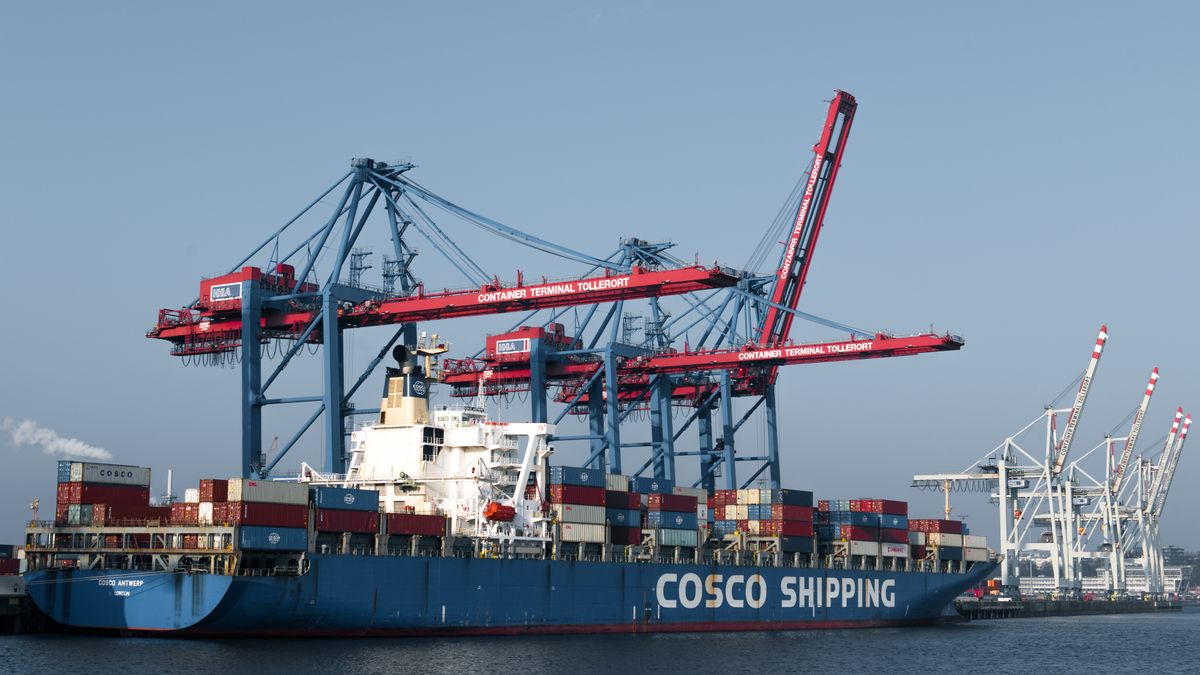
“It already left the port, it will be here in two weeks.” That is how it almost always starts, and what follows rarely fits in two weeks. What arrives is a production line taken apart into four, six or eight containers, and between opening the first one and the plant turning out something it can sell, months go by. How many depends less on the machinery than on what got prepared while the ship was still at sea.
The building has to be finished, with the floor poured, the foundations built to the supplier’s foundation drawings and the utilities brought to the exact spot where they will be needed. Power sized for the whole line and not just for the biggest machine, compressed air, water, gas where it applies. When any of that is missing, the containers get opened anyway, but the machine ends up parked in a corner. A parked machine gets hit by the forklift, loses its bags of bolts and collects dust inside the control panel.
Receiving is done with the packing list in hand. Every crate is counted, photographed and ticked off, and any dent, shortage or wet box is documented the same day, because transport insurance gives you a few days to claim and after that there is nobody to claim against. Whatever will not be erected that week goes under a roof. The yard is for the empty containers.
Erection starts with the heaviest piece of equipment and with the one that fixes the position of the rest, then follows the flow of material: the machine that feeds, the ones in between, the one that discharges. To move each crate you read the crane’s load chart at the actual lifting radius, not the capacity painted on the boom, and you use the lifting lugs the machine came with or weld on lugs calculated for it. Each unit is leveled on its base, anchored, and only then connected.
There is a part of the factory that never comes in the container. The platforms to reach the feed hopper, the stairs, the walkways between machines, the pipe and duct supports, the intermediate hoppers, the chutes, the barriers that keep the forklift from hitting a panel. All of that gets fabricated locally, and it pays to fabricate it from measurements taken once the machines are standing in place, because the supplier’s drawing almost never matches what arrived to the centimeter. At Indumor we do it in that order, with a survey on site, fabrication in Córdoba and erection.
Start-up happens in stages. First each machine alone, empty, checking that the motor turns the right way. Then with material. Then chained to the one before and the one after. A fault that shows up with the line chained together is very hard to find if each unit was never run on its own. And everything gets written down, parameters, what was touched, what is still pending. No baling-wire fixes for later, because later never comes.
A biomass pellet line arriving in five containers makes a typical example. Two months to finish the building and the foundations, three weeks of erection, one more week for the walkways, intermediate hoppers and supports made to measure, and ten days of staged start-up until the first bag. A little over three months from the port, with the line producing what the catalog said. The ones assembled the other way around, opening containers onto an unfinished floor, usually take twice as long and end up full of patches.
When the supplier does not show up, we put it together.
View service →Tell us what is coming, in how many containers and how the building stands, and we will plan the erection in stages.
© Indumor 2010–2026 — Industrial steel fabrication, Córdoba, Argentina
